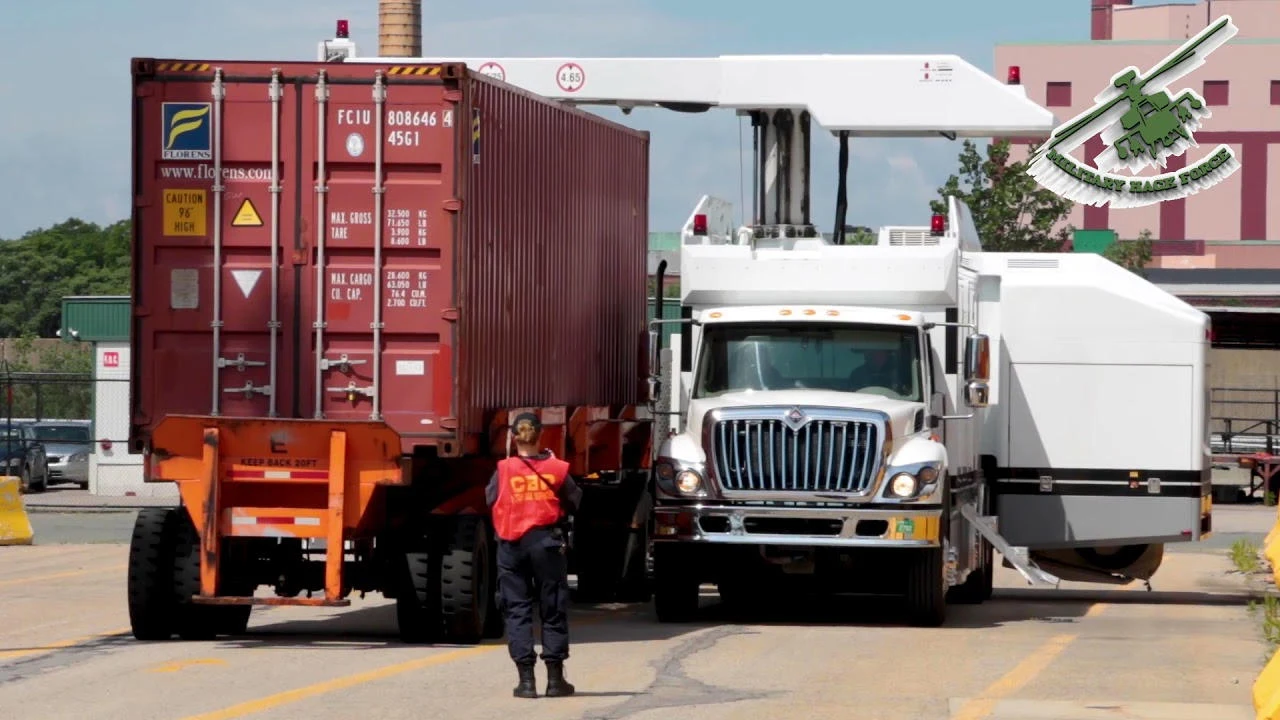
A tariff is a tax on imported goods, collected by US Customs from the company that brings the goods across the border — not from the exporting country. The importer writes the check, but it rarely absorbs the whole cost: part gets passed to manufacturers as higher input prices, part to retailers as higher wholesale prices, and part lands in the price you pay at the store. Economists call the split pass-through, and it is why a tariff announced in one month reaches a shelf price two or three quarters later, after pre-tariff inventory sells through.
SAMCASH publishes information, not economic or political advice — this article explains the mechanism, not whether any tariff policy is right.
Who actually pays a tariff?
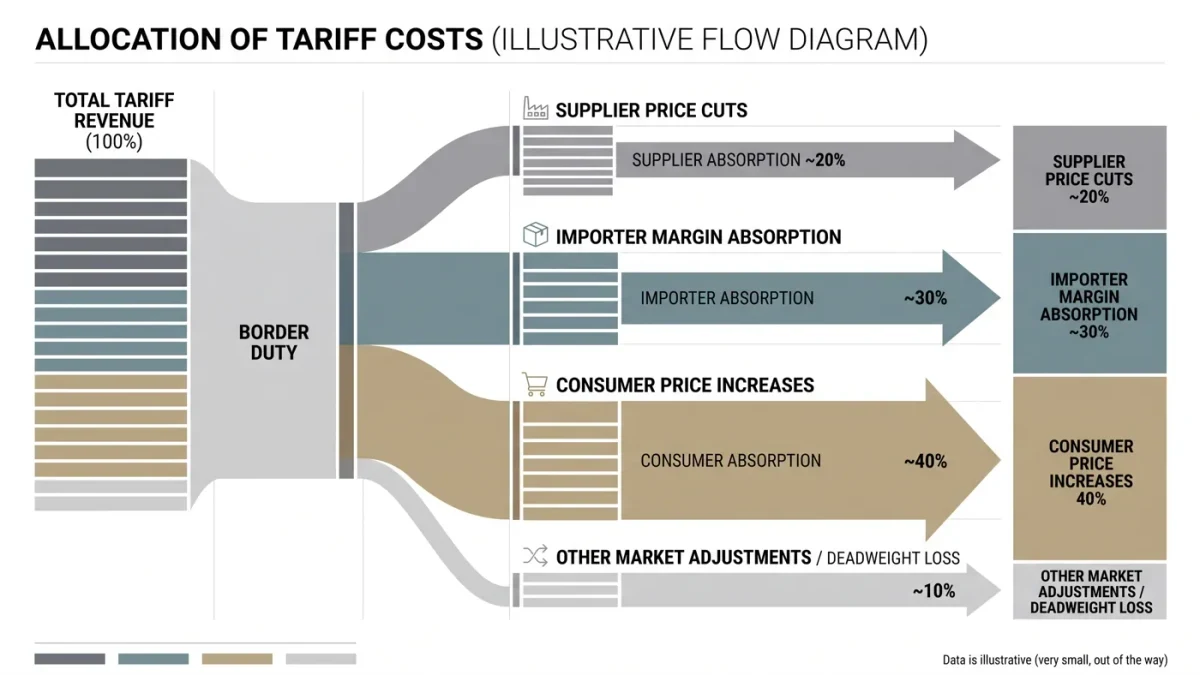
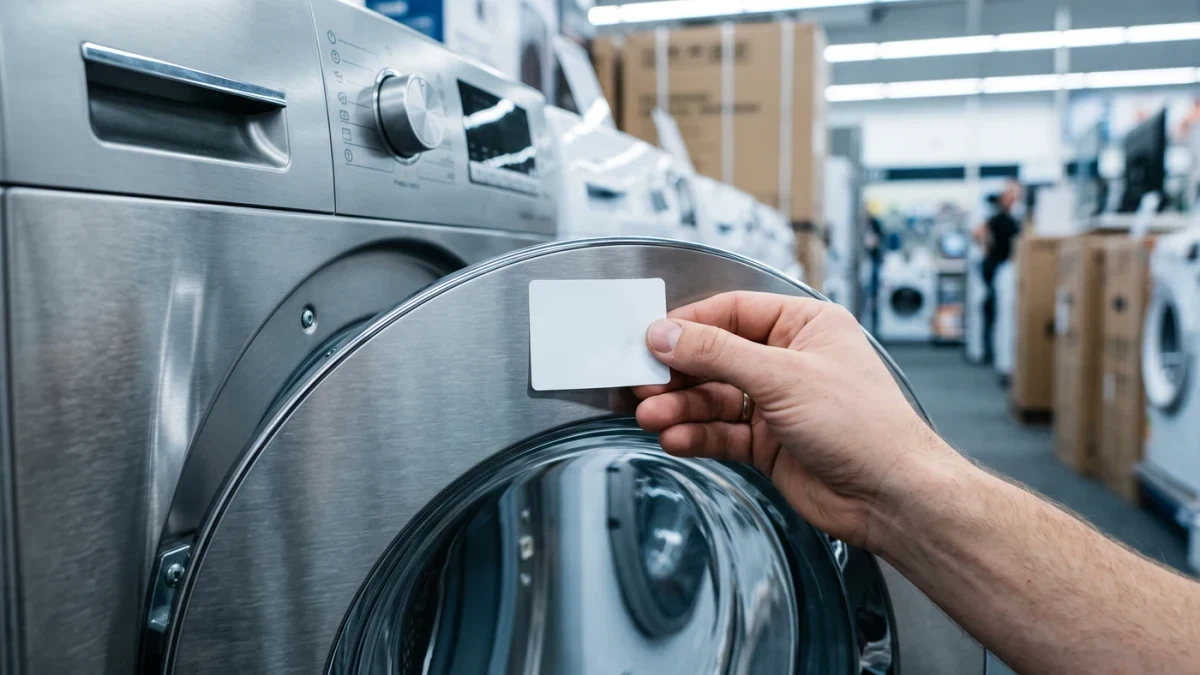
Three groups split the bill, in proportions that vary by product. The importer or retailer absorbs some margin rather than lose sales. The exporting producer sometimes cuts its price to keep market share — effectively paying part. And the consumer pays the rest through higher prices, with essentials and goods with few substitutes absorbing the most. A store-brand appliance with no domestic alternative passes nearly everything through; a luxury import with domestic competitors passes less, because shoppers can switch.
Why do prices rise months later?
Inventories act as a buffer. A retailer holding three months of pre-tariff stock keeps old prices until new stock arrives at the new cost. Contracts delay it further — importers locked into annual pricing reset at renewal, not at announcement. The result is a stair-step: prices climb gradually over two or three quarters rather than jumping on announcement day, which also means prices stay elevated for a while after any tariff is removed, until cheap inventory works through again.
Which prices move most?
Goods with high import content: electronics, appliances, apparel, autos and auto parts, and many grocery staples that depend on imported inputs — fertilizer, packaging, coffee, produce out of season. Services move least, since a haircut is not imported. Within goods, the pattern holds: the more of the product's cost crossed a border, the more its price responds to tariff changes.
What can you actually do about it?
- Front-load purchases you already planned — an appliance nearing replacement is cheaper before restocks reprice.
- Substitute where quality allows: domestic alternatives and store brands dodge part of the imported markup.
- Protect the grocery line with unit prices: compare cost per ounce, not package price, since shrinking packages are a quiet form of pass-through.
- Keep the emergency fund fed — price shocks are exactly the surprise a reserve exists to absorb without debt.
Does anything shield a category from tariffs?
Domestic production with domestic inputs does — locally quarried materials, US-grown food in season, services from plumbers to streaming. Some importers also reroute supply chains or negotiate cost-sharing, which trims pass-through at the expense of their margins. None of it is instant: rerouting suppliers takes quarters, which is one more reason the price effects arrive slowly and leave slowly.
How does this connect to inflation and the Fed?
Tariffs are a one-time push to the price level, but repeated rounds become an inflation story, and inflation drives interest-rate policy. The Federal Reserve paused after its December 2025 cut, holding its target range at 3.50%–3.75% into 2026 while inflation remained above its 2% goal — and tariff pass-through was one of the reasons prices stayed sticky. For savers that pause kept high-yield accounts paying around 4%; for borrowers it kept card and loan rates elevated. One border tax, in other words, eventually reaches your APY too.
FAQ
Do tariffs raise government revenue?
Yes — tariff collections go to the Treasury, and they have grown with the tariff levels of recent years. But revenue is not relief for households paying the passed-through share; the two sides of the ledger land on different people.
Are tariffs the reason everything is more expensive?
They are one input among several — housing, wages, and energy all feed measured inflation. Tariffs explain part of goods-price pressure in affected categories, not the whole price level, and categories without imports can rise for entirely different reasons.
Will prices fall if tariffs are removed?
Eventually and incompletely. Retailers sell down tariffed inventory first, and where competition is thin, some of the increase tends to stick. Treat removals as gradual relief, not a reset button.