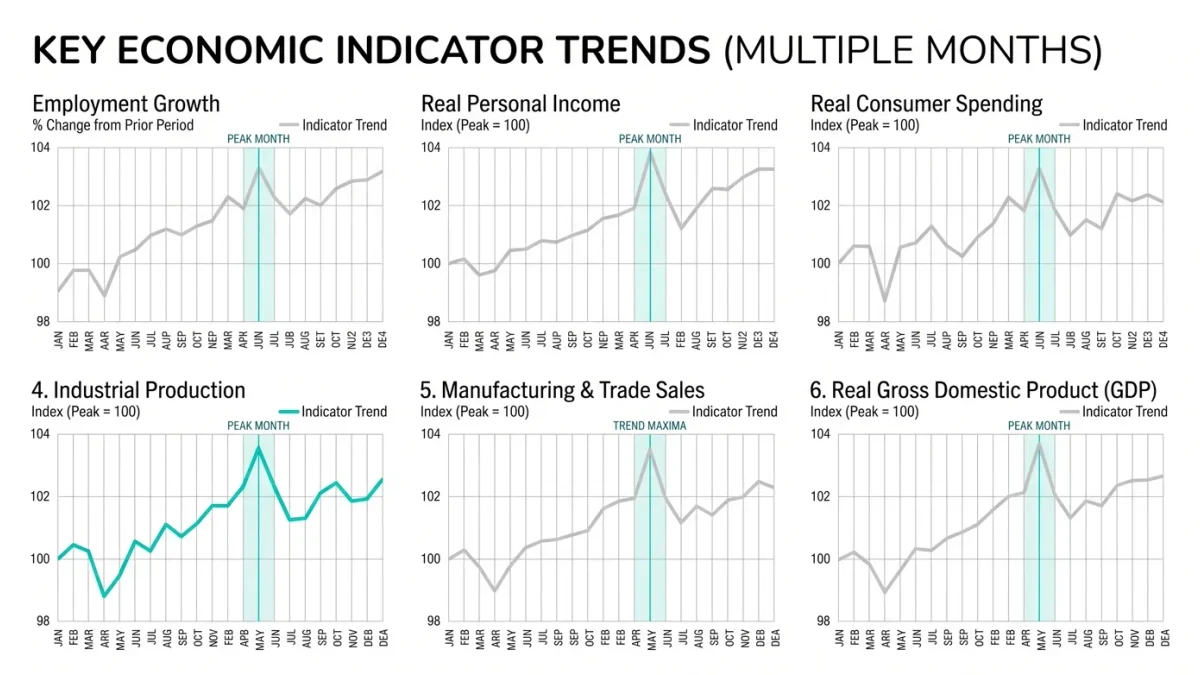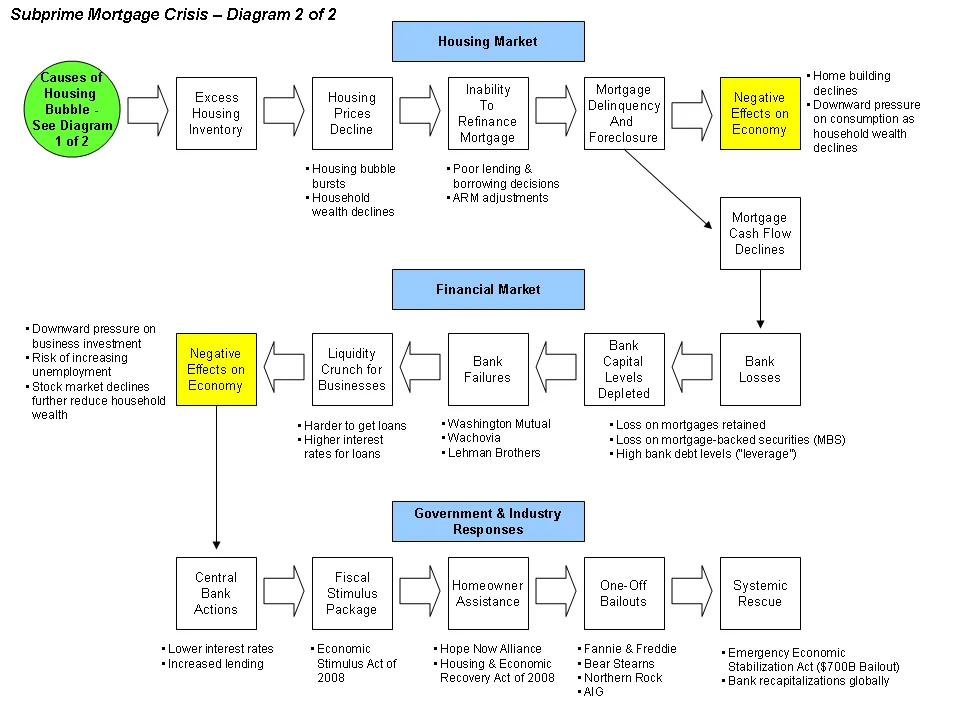

A recession is a significant, broad-based decline in economic activity lasting more than a few months — the official dating belongs to the National Bureau of Economic Research, which marks peaks and troughs by looking at jobs, output, income, and spending, usually months after the fact. The informal shorthand — two consecutive quarters of shrinking GDP — catches most recessions but also misfires occasionally, as it did in 2022's technical contraction that the NBER never called a recession. For your money, the practical translation is simple: the risk of job loss rises, markets often fall before and during, and borrowing costs usually come down as the Fed cuts.
SAMCASH publishes information, not financial advice — recession exposure depends on your industry, savings, and debts.
What typically happens — and when?
Stocks usually fall first, because markets price the recession before the data confirm it; by the time a downturn is officially dated, markets have often been recovering for months — in 2020 the recession ended in April while the announcement came in July. Jobs weaken next: unemployment rises, raises shrink, bonus-heavy pay thins out. Then policy responds — the Fed cuts rates, which lowers savings yields but eases card and loan costs. Through 2025 and into 2026, growth slowed to about a 2% annualized pace in early 2026 per Bureau of Economic Analysis estimates, with the Fed holding its 3.50%–3.75% range — a slowdown distinct from a recession, and a reminder that the two get confused constantly.
What should you do before one arrives?
- Build the emergency fund to three to six months of expenses — the single highest-leverage move, because it converts a job loss from a crisis into a managed event.
- Pay down floating-rate debt now: card balances at 20%-plus compound against you faster than any recession raises them, and clearing them is a guaranteed return.
- Keep investing on schedule — automatic purchases during downturns buy more shares at lower prices, which is where long-term returns are actually made.
- Invest in career capital — certifications, network, and skills cut job-search time more than portfolio tweaks cut losses.
- Stress-test the fixed costs: a budget that survives a 20% income cut needs no heroics later.
What should you not do during one?
Panic-selling is the expensive one. Selling after a 20% fall converts a temporary decline into a permanent loss, and the best market days cluster inside the worst weeks — missing them devastates long-run returns. Hoarding cash beyond a reasonable reserve carries its own cost once markets recover. And locking defensive moves like cashing out retirement accounts early triggers taxes and penalties precisely when income is least stable. The plan you built before the recession is the plan that carries you through it; the recession is not information your plan lacks.
| Money area | Typical recession effect | Sensible posture |
|---|---|---|
| Jobs | Unemployment rises, hiring slows | Emergency fund, network, skills |
| Stocks | Fall early, recover before the news | Keep buying on schedule |
| Savings rates | Fall as the Fed cuts | Lock longer terms early if desired |
| Card and loan rates | Ease with policy cuts, lagging | Attack high-rate debt regardless |
| Housing | Mortgage rates often fall | Refinance math improves |
Does a recession mean everyone loses their job?
No — even in the 2008–2009 recession, the deepest of the modern era, roughly nine in ten workers stayed employed. Unemployment rose by about six percentage points at the worst, which was catastrophic for those hit and merely anxious for most. The distribution is uneven: construction, manufacturing, and discretionary retail absorb losses first, while healthcare, utilities, and government thin out more slowly. Preparation should track your own sector's sensitivity, not the headline number.
FAQ
How do I know if a recession is coming?
You mostly will not, reliably — professional forecasters have missed nearly every recession's timing. Use indicators as urgency, not prophecy: the yield curve, layoffs in your industry, and slowing job postings argue for accelerating your preparations, not for dramatic portfolio moves.
Should I stop my 401(k) contributions during a downturn?
Almost never — especially not below the employer match. Contributions falling in price buy more shares, and the match is an immediate 50–100% return no recession removes. Reducing contributions makes sense only to rebuild a depleted emergency fund.
Is cash king in a recession?
A funded reserve is; idle cash beyond it is not. Savings yields fall with Fed cuts — the 3.50%–3.75% range of early 2026 could be lower in a real downturn — while assets bought cheap appreciate. Hold the reserve you need, invest the rest on schedule.