The Fair Debt Collection Practices Act — the FDCPA, enforced by the Consumer Financial Protection Bureau — limits what third-party debt collectors may do when pursuing consumer debts: no contact before 8 a.m. or after 9 p.m. local time without your permission, no calls at work once you say the employer forbids it, no discussion of the debt with family, neighbors, or employers, and no threats, obscene language, or misrepresentation of what they can legally do. Violations are actionable — you can sue for damages within one year of the violation — which is why knowing the rules changes the balance of every collector call.
SAMCASH publishes information, not legal advice — debt situations carry legal consequences, and a legal aid attorney or a nonprofit credit counselor is the right escalation for anything contested.
What can collectors legally do?
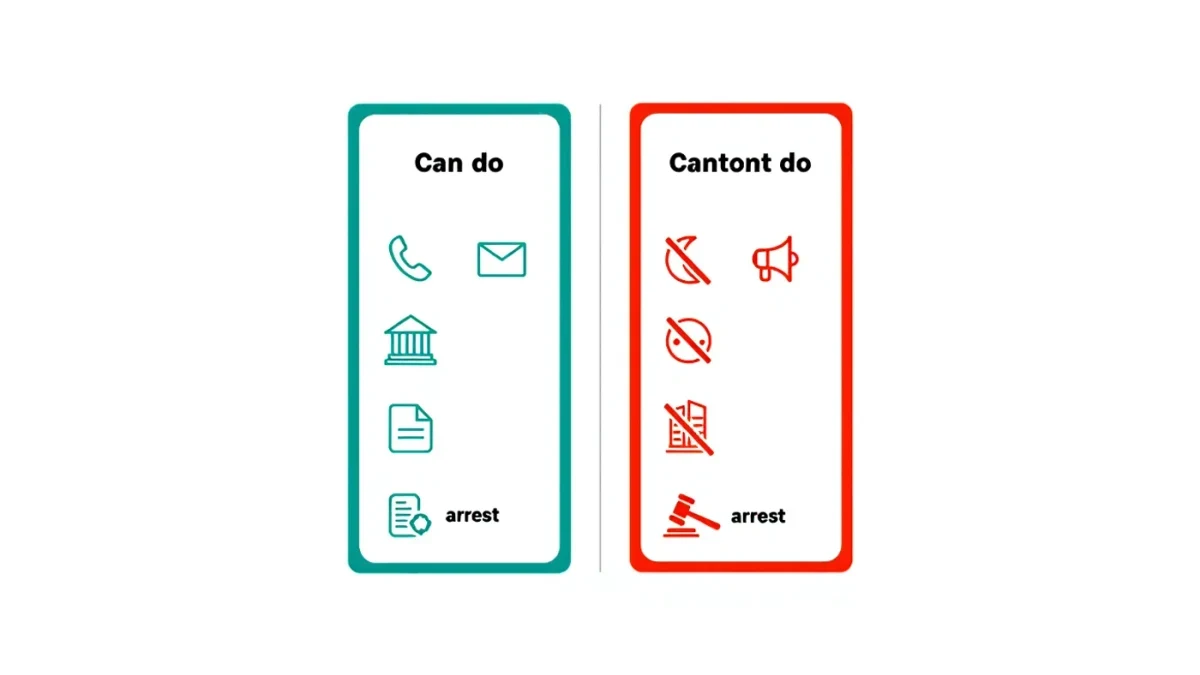
Plenty, within the lines: contact you by phone, mail, email, and text (the CFPB's 2021 rules clarified channels and an opt-out for each); report the debt to credit bureaus; sue you in court and, with a judgment, pursue lawful garnishment in states that allow it; and add permitted interest and fees where the original contract and state law allow. The FDCPA covers third-party collectors — agencies and debt buyers — rather than original creditors collecting their own accounts, though many states extend similar rules to creditors, and the rules do not erase any legitimately owed debt.
What is flatly forbidden?
- Harassment or abuse — repeated ringing, obscene language, threats of violence
- False statements — posing as attorneys or government agents, inflating the amount, threatening arrest for a consumer debt
- Unfair practices — collecting more than the debt permits, depositing postdated checks early, contacting you after written cease-communication
- Third-party disclosure — telling anyone other than your spouse or attorney about the debt
- Ignoring your validation rights — continuing collection before providing written validation after you request it
What is the validation letter — and why does it matter?
Within five days of first contacting you, the collector must send a written validation notice stating the amount, the creditor, and your right to dispute within 30 days. Dispute in writing in that window and collection must pause until the collector mails verification — the original account documentation. This matters because debt buyers purchase portfolios with documentation gaps, and debts past the statute of limitations or tied to identity theft surface here. The CFPB publishes sample letters for validation requests, disputes, and cease-communication — send everything in writing, keep copies, and use certified mail for anything that starts a clock.
What is your practical playbook for a collector call?
- Say nothing that admits or promises anything on the first call — take the validation address and end the conversation.
- Send the written dispute within 30 days if anything looks wrong — wrong amount, unknown creditor, wrong person.
- Check your state's statute of limitations before making any payment: a partial payment can restart the clock on an otherwise time-barred debt.
- Decide the endgame deliberately — pay in full, settle for less with terms in writing before paying, or arrange a payment plan you can actually sustain.
- Log every contact — date, time, name, what was said — because the log is what converts an FDCPA violation into a enforceable claim.
What about old debts and lawsuits?
Never ignore a summons — default judgments, not phone calls, are what turn debts into garnishments, and answering forces the collector to prove standing and documentation. Time-barred debts occupy special ground: collectors may still ask for payment, but suing on a time-barred debt violates the FDCPA, so say in writing that you know the debt is past the limitation period and invoke your state's rules. Medical and student debts carry their own rules and forgiveness programs; treat collector claims about eligibility with skepticism and verify with the original creditor or servicer.
FAQ
Can a collector take money from my paycheck?
Only with a court judgment, and only in your state's garnishment framework — federal limits cap ordinary garnishment at 25% of disposable earnings or the amount above 30 times the federal minimum wage, whichever is less. Social Security benefits are generally protected when direct-deposited.
Does a cease-and-desist letter erase the debt?
No — it stops communication, not the obligation, and the collector's next lawful move can be a lawsuit. Use cease-communication when calls turn abusive; use validation and disputes when the debt itself is the question.
Should I pay a collector to protect my credit score?
Understand the reporting first: collections generally stay on reports for seven years from delinquency whether paid or not, though newer scoring models and lender policies treat paid collections more kindly. Paying a legitimate debt is right; paying a vague one to quiet the phone is the expensive reflex the FDCPA exists to moderate.