The reliable way to cut a grocery bill is structural, not promotional: compare unit prices instead of package prices, buy store brands where they match, shop from a planned list, and stop paying for food you throw away. Those four levers routinely trim 15% to 25% — on a $1,100 monthly family grocery bill, a 20% cut is $220 a month, or $2,640 a year — while couponing typically moves the bill by low single digits and costs hours. And with grocery prices having risen far faster than overall inflation since 2020, per Bureau of Labor Statistics food indexes, the levers are worth more now than they were.
Why does the unit price beat the sticker?
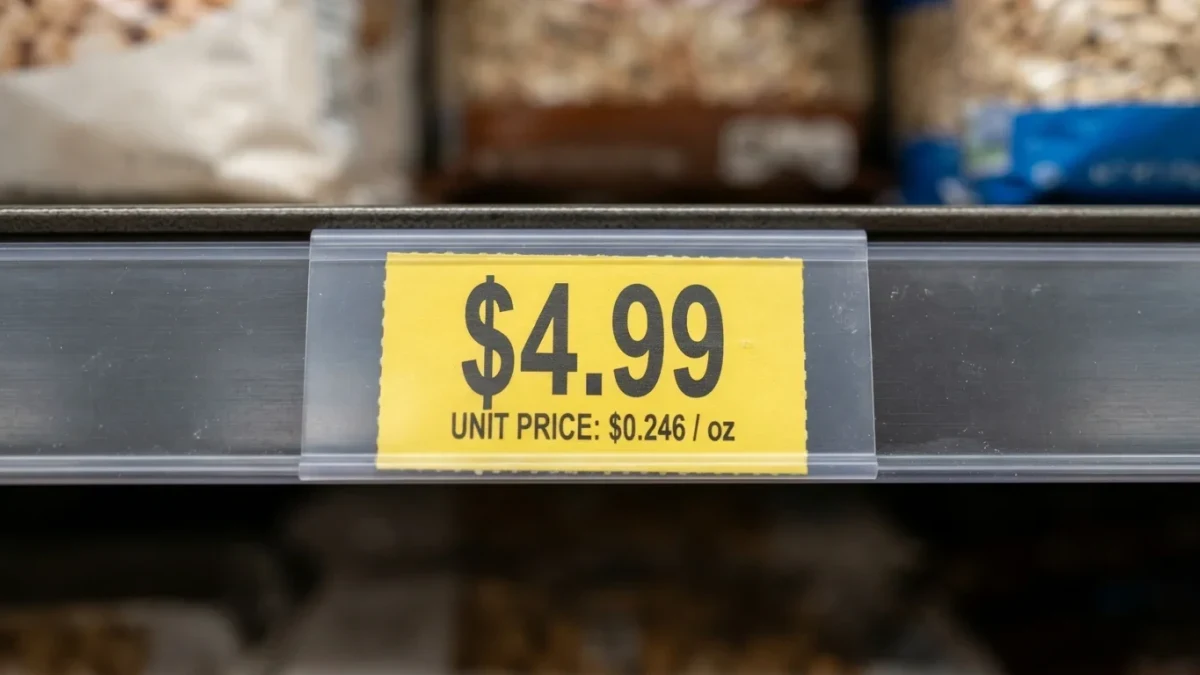
Because packages lie by shrinking. The shelf tag's cost-per-ounce lets a $4.49 12-ounce box lose honestly to a $6.79 20-ounce one — 37.4 cents versus 34.0 cents an ounce. Shrinking packages are themselves a quiet price increase, and unit arithmetic is the only consumer defense that works without regulation. Compare within category once, remember the winning sizes and brands, and the habit pays every trip without new effort.
How much do store brands really save?
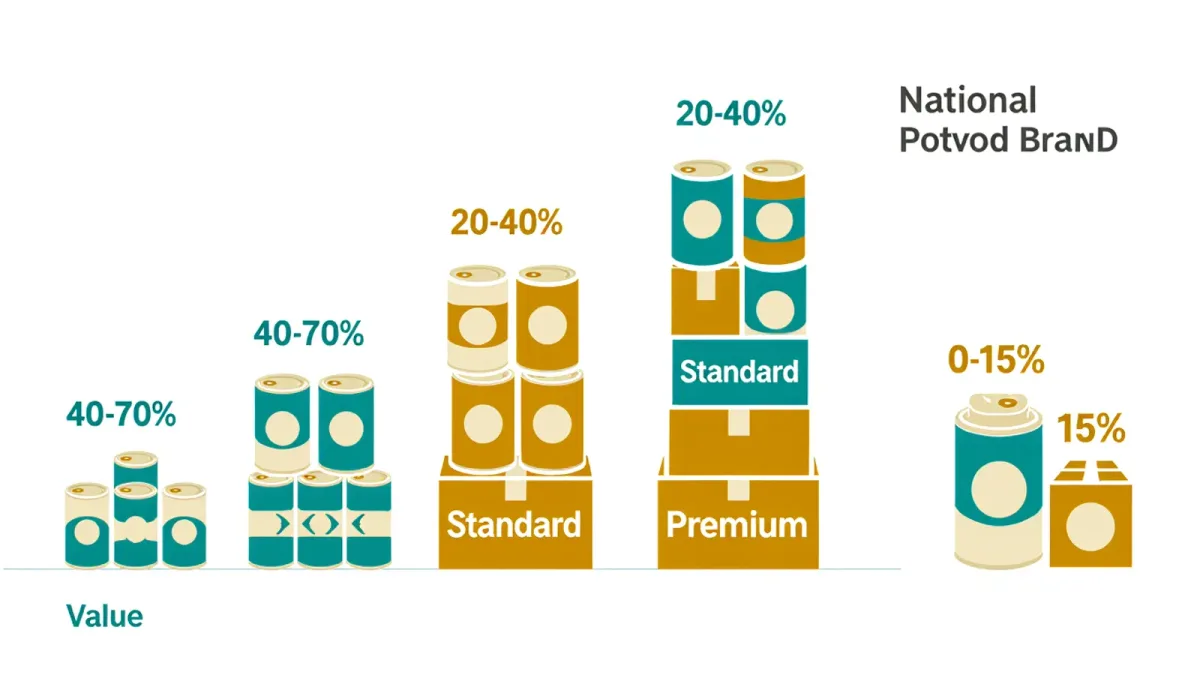
Commonly 15% to 30% against name brands, with blind taste panels routinely splitting the difference on staples — flour, canned goods, dairy, pasta, spices, frozen vegetables. The strategy is surgical, not total: swap the ingredients buried in recipes first, keep the two or three name brands you genuinely taste (an unloved jar of pasta sauce nobody eats is not savings), and re-test occasionally — recipes and formulations change. A household converting half of a $1,100 bill at a 20% average gap saves about $110 a month before touching quantity at all.
What does a planned list actually prevent?
Impulse purchases, which industry data place at a meaningful share of the average basket, plus the duplicate-buying of things already in the pantry. The efficient loop runs weekly: inventory what exists, plan five to seven dinners around it plus the week's protein sales, write the list in store layout order, and — the strong version — order the same list for curbside pickup, where shelf-end marketing cannot reach you and substitution discipline holds at about an hour of your time. One warning the pickup habit teaches fast: the convenience fee is usually smaller than the impulse savings, but the tip and fee arithmetic deserve a check on small baskets.
| Lever | Typical saving | Effort |
|---|---|---|
| Unit-price comparison | 5–10% | None after habit forms |
| Store-brand swaps | 10–20% of swapped items | Low, one-time tests |
| List + pickup | 5–15% via impulse control | Weekly planning hour |
| Waste control | Up to 10% of the bill | Designated leftovers night |
Percentages are typical ranges observed by consumer studies; they compound rather than add exactly.
How does waste control save money?
By paying only for food you eat. Roughly a third of food in the United States goes unsold or uneaten, per USDA and EPA estimates, and household refrigerators contribute their share — the wilted spinach, the forgotten leftovers, the yogurt behind the jar. Three habits claw it back: a designated leftovers night each week, freezing the second half of anything fresh you did not cook, and shopping for produce twice weekly in smaller amounts rather than once big. Every dollar of food rescued is a grocery dollar already earned — the highest-margin saving in the store because it buys nothing new.
What about warehouse clubs and discount grocers?
Warehouse clubs pay for households that use them deliberately: shelf-stable staples, paper goods, and freezable proteins at genuine per-unit discounts, against membership fees that typically run $60 to $130 a year — do the break-even once, honestly. The trap is bulk perishables and novelty sizes that convert the warehouse into a waste generator. Discount grocers and international markets underprice the big chains on produce and staples by wide margins in most metros; adding one as a second stop is the cheapest structural change available, no membership required.
How do you hold the line when the household resists?
Change fewer things, keep the favorites, and let the numbers recruit the skeptics. Swap the invisible ingredients — the ones inside recipes — while leaving the standalone taste-tests alone; nobody notices the store-brand flour in a casserole, everybody notices the cereal. Put the saved amount on the fridge as a running total toward a family goal, because $220 a month toward a trip lands differently than an abstract spreadsheet line. And schedule one deliberate exception a month — a planned treat costs less than a rebellion.
FAQ
Are grocery cash-back apps worth it?
They stack a few percent with almost no effort, which is fine — but they reward buying, not planning, and the featured brands are often the higher-priced ones. Treat them as garnish on the structural levers, never the meal.
Does buying in bulk always save money?
Only for shelf-stable and freezable items you actually consume at their normal rate. Bulk perishables, bulk novelties, and bulk anything without home storage space convert savings into waste — the unit price wins only on food you eat.
How do I cut the bill when prices keep rising?
Re-run the four levers each quarter — rising prices shift which sizes, brands, and stores win the unit-price comparison, so last year's habits quietly stop being the cheap ones. The structural method survives inflation; any fixed list of cheap things does not.