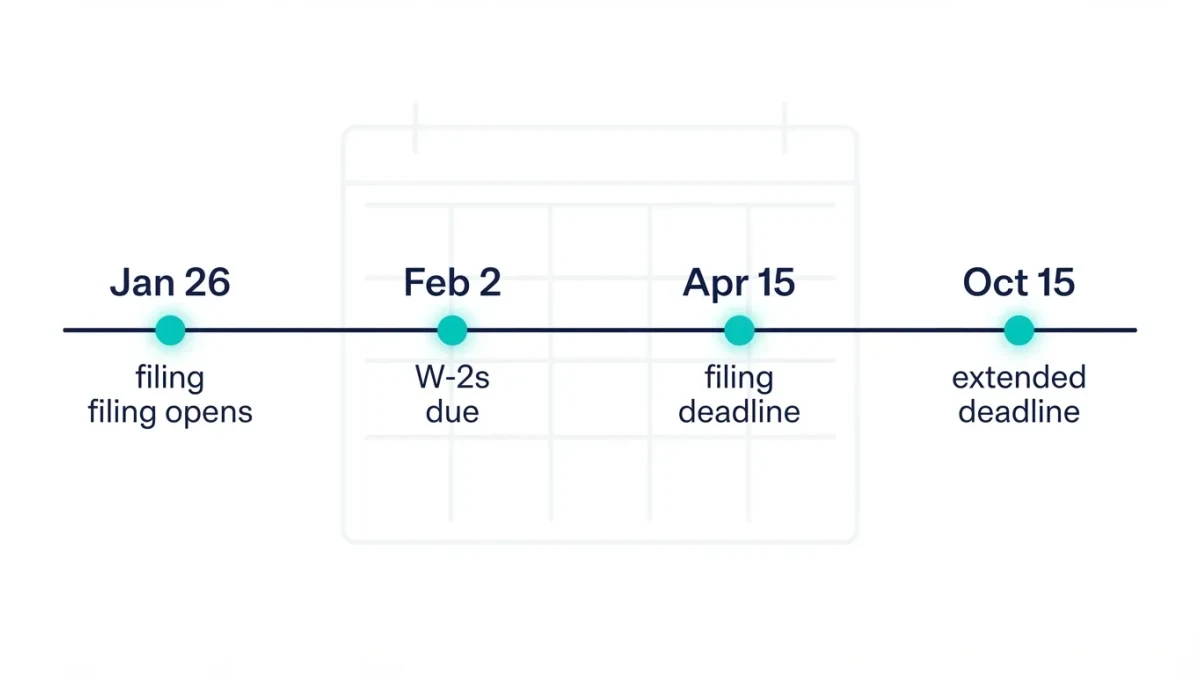
The IRS opened the 2026 filing season on Monday, January 26, 2026, the date it began accepting and processing electronically filed federal returns for tax year 2025. Per the IRS, employers had until February 2 to issue W-2s and 1099s, the filing deadline is Wednesday, April 15, and the extended deadline for those who request more time is October 15. Filing early shortens refund waits and slows refund fraud, because a criminal cannot successfully file in your name once your real return is in.
SAMCASH publishes information, not tax advice — filing decisions depend on your income, credits, and paperwork.
Which documents should you wait for?
All of them, including the boring ones. Beyond the W-2, this season's returns need every 1099 — interest, dividends, gig and contractor income, unemployment, retirement distributions — plus forms for health coverage and education credits. The IRS matches these documents automatically, and filing before one arrives is the classic way to trigger a corrected return months later. If a form is missing after mid-February, contact the payer first, then the IRS.
When will your refund arrive?
Most e-filed returns with direct deposit are processed within 21 days, per the IRS — paper returns take substantially longer. One legal exception matters: by law, refunds involving the Earned Income Tax Credit or the Additional Child Tax Credit cannot be issued before mid-February, so families claiming those credits should plan on late-February deposits even when they filed in January. Track status in the IRS Where's My Refund tool rather than by phone.
What is new on 2025-year returns?
Larger standard deductions and a higher state-and-local-tax cap are the headline changes most filers will notice — the standard deduction rises to $16,100 for single filers and $32,200 for joint returns, and the SALT cap climbs to $40,400. The practical effect cuts both ways: some households that itemized in prior years will do better taking the standard deduction now, so run both paths before choosing.
FAQ
Is it better to file in January or wait?
File when every document is in hand — January filing with a missing 1099 creates amendment work. If your paperwork is complete, early filing means a faster refund and earlier protection against someone filing fraudulently in your name.
What if I cannot pay the tax I owe?
File anyway by April 15. The failure-to-file penalty is far steeper than the failure-to-pay penalty, and the IRS offers short-term and monthly payment plans you can set up online — paying something now always beats ignoring the balance.