
The 2025 tax law's second year brings the numbers most households will actually notice. For 2026, the standard deduction rises to $16,100 for single filers and $32,200 for married couples filing jointly — $24,150 for heads of household — while the cap on state-and-local-tax deductions climbs to $40,400. The rate brackets themselves became permanent, keeping the top rate at 37%. Together the changes push many filers toward the standard deduction while pulling some high-tax-state households back toward itemizing.
SAMCASH publishes information, not tax advice — deduction strategy depends on your income, state, and records.
Why the SALT cap matters again
The state-and-local-tax deduction — income or sales taxes plus property taxes — was capped at $10,000 from 2018 through 2024, then $40,000 for 2025 and now $40,400 for 2026. The cap phases down by 30% of income above $500,000 of modified adjusted gross income, never below $10,000, and the whole expanded cap is scheduled to revert to $10,000 in 2030. The practical math: a household paying $18,000 of state income and property taxes can now deduct all $18,000 rather than $10,000, which makes itemizing competitive again in states like New York, New Jersey, and California.
What is new for non-itemizers?
A charity deduction without itemizing. Starting with 2026 returns, taxpayers who take the standard deduction can deduct cash charitable gifts up to $1,000 — $2,000 for joint filers. It is modest, but it rewards keeping donation receipts even when the standard deduction swallows everything else.
Should you itemize or take the standard deduction?
Run both paths. Add up mortgage interest, the now-generous SALT amount, and charitable gifts; if the total beats $16,100 or $32,200, itemize — otherwise take the standard. Many filers near the line alternate year to year, bunching two years of charitable gifts into one itemized year and taking the standard deduction the next.
FAQ
Do these changes apply to the return I file this season?
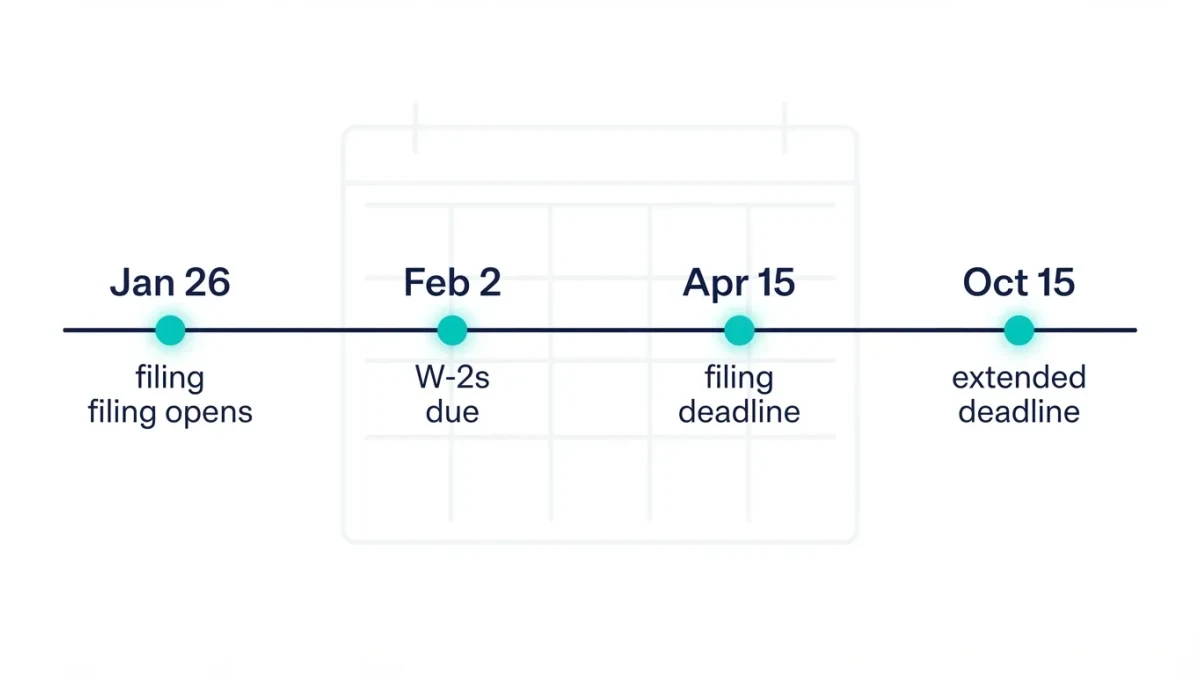
No — the return due April 15, 2026 covers tax year 2025, which used a $40,000 SALT cap and the 2025 deduction amounts. The $16,100 and $40,400 figures apply to tax year 2026, filed in 2027.
Does the higher SALT cap help renters?
Only indirectly — renters can deduct state income or sales taxes under SALT but generally not rent. The cap's main beneficiaries remain homeowners in high-tax states with property tax and mortgage interest to stack.