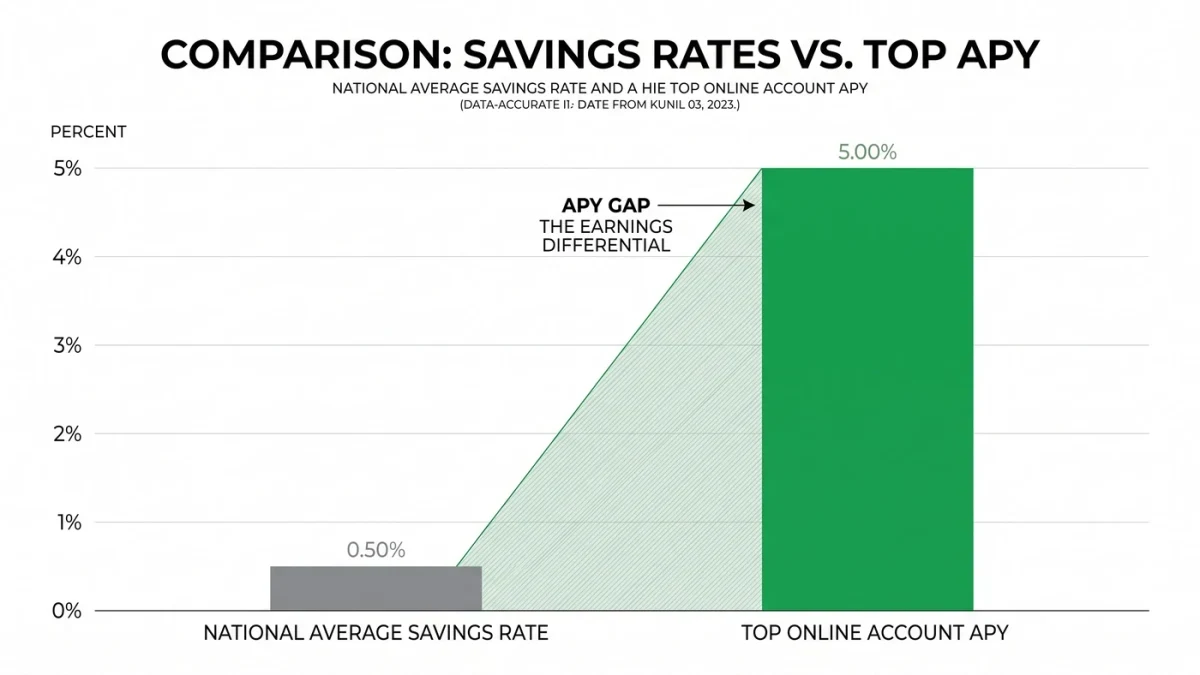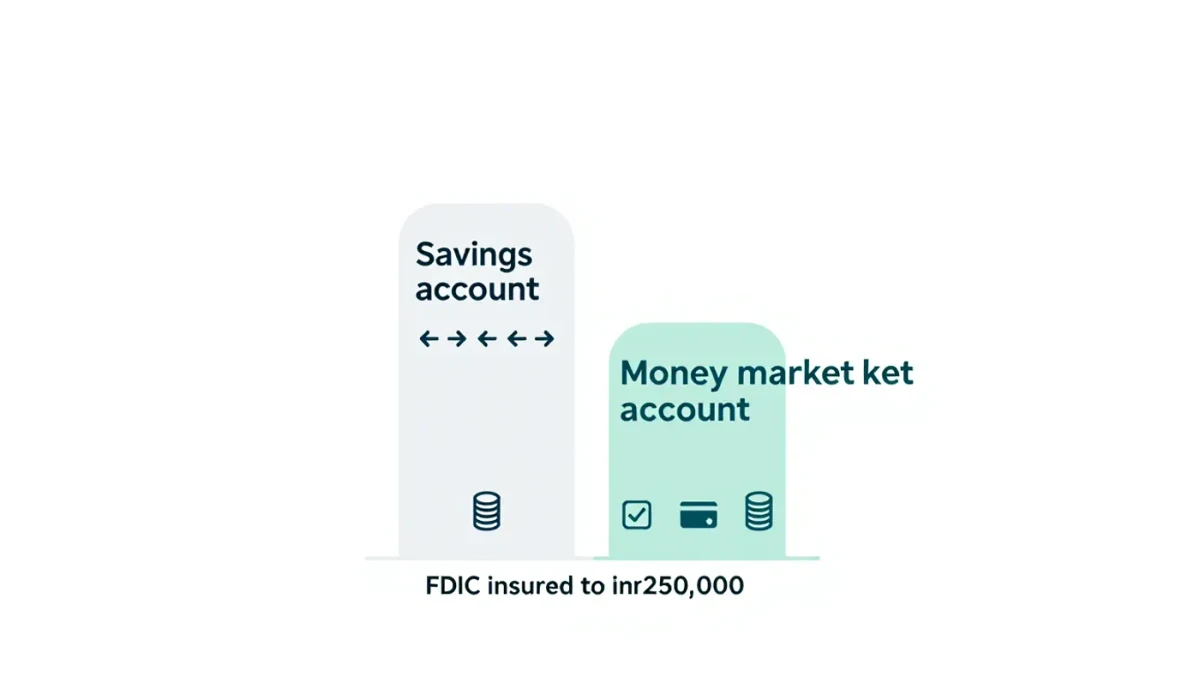

A high-yield savings account is an ordinary savings account that pays a far above-average interest rate — commonly around 4% APY at online banks as of late 2025 and early 2026, while the national average savings rate sat below half a percent, per FDIC national rate data. It is not a different product category: deposits are still withdrawable cash, and at an FDIC-member bank they carry the same federal insurance as any savings account, up to $250,000 per depositor, per bank, per ownership category.
SAMCASH publishes information, not financial advice — where you hold cash depends on your balances, goals, and need for access, and rates change with the market.
Why do online banks pay so much more?
No branches to fund. Online banks skip the cost of tellers and real estate and pass part of the savings into deposit rates; branch banks often pay a fraction of a percent because their customers stay for convenience. The Federal Reserve's December 2025 cut to a 3.50%–3.75% target range has pulled top yields gradually lower, but the gap between competitive accounts and average ones remains several percentage points — the largest persistent gap in everyday banking.
What does the difference actually earn?
Real arithmetic on a $10,000 balance for one year: at 4% APY with monthly compounding the account earns about $407 — 10,000 × (1 + 0.04/12)¹² ≈ 10,407. At the roughly 0.4% national average, the same balance earns about $40. Same money, same insurance, a $367 difference — which is why moving idle cash is one of the highest-paying twenty-minute tasks in personal finance.
| Balance | At 4.00% APY | At 0.40% APY | Annual difference |
|---|---|---|---|
| $2,500 | ≈ $102 | ≈ $10 | ≈ $92 |
| $10,000 | ≈ $407 | ≈ $40 | ≈ $367 |
| $25,000 | ≈ $1,018 | ≈ $100 | ≈ $918 |
Assumptions: rates held constant for twelve months, interest compounded monthly, no deposits or withdrawals. Actual yields vary and decline when the Fed cuts.
Is there a catch?
Small ones, mostly logistical. Some accounts require a minimum opening deposit or cap the promotional rate by balance tier. Transfers to your checking bank take one to three business days, so a high-yield account works best as a companion to checking, not a replacement. Watch for two genuine red flags: rates that apply only to a first few months, and institutions whose deposits are not FDIC-insured — if the label says investment account or crypto yield, federal deposit insurance does not apply.
A practical rhythm solves the transfer lag: keep one month of spending in your local checking account, sweep the rest into the high-yield account, and move money back once or twice a month by schedule. Some savers open the high-yield account at the same institution as their checking to get instant internal transfers, accepting a slightly lower rate for speed. Either structure works — the failure mode is treating the account as a place money goes to hide from you, which brings us back to tracking.
How do you open one?
Count on fifteen minutes online. You will need your Social Security number, a government ID, and a linked funding account. Confirm three things before applying: the current APY and its tier structure, the FDIC member status shown in the bank's deposit agreement, and the withdrawal rules — federal rules no longer cap savings transfers, but individual banks may. Then move only cash you truly hold in savings; money needed for investing or debt payoff earns its best return elsewhere. Re-check the APY each quarter the way you check a utility bill, because promotional tiers expire and quiet cuts are common once the Fed stops raising.
FAQ
Can I lose money in a high-yield savings account?
Not to market moves — the dollar balance does not fluctuate. The risks are practical: balances above $250,000 exceed FDIC insurance at one bank, and inflation can outearn your rate, quietly shrinking purchasing power even as the balance grows.
Do I pay tax on the interest?
Yes. Interest is ordinary income reported on a 1099-INT when it totals $10 or more in a year, and it is taxed at your regular rate. States generally tax it too, so a large balance produces a real tax line.
Should I wait for rates to rise before opening?
No — waiting costs the gap every month. Open the competitive account now and keep watching the rate; switching later between online banks is fast, and loyalty is not rewarded in this market.