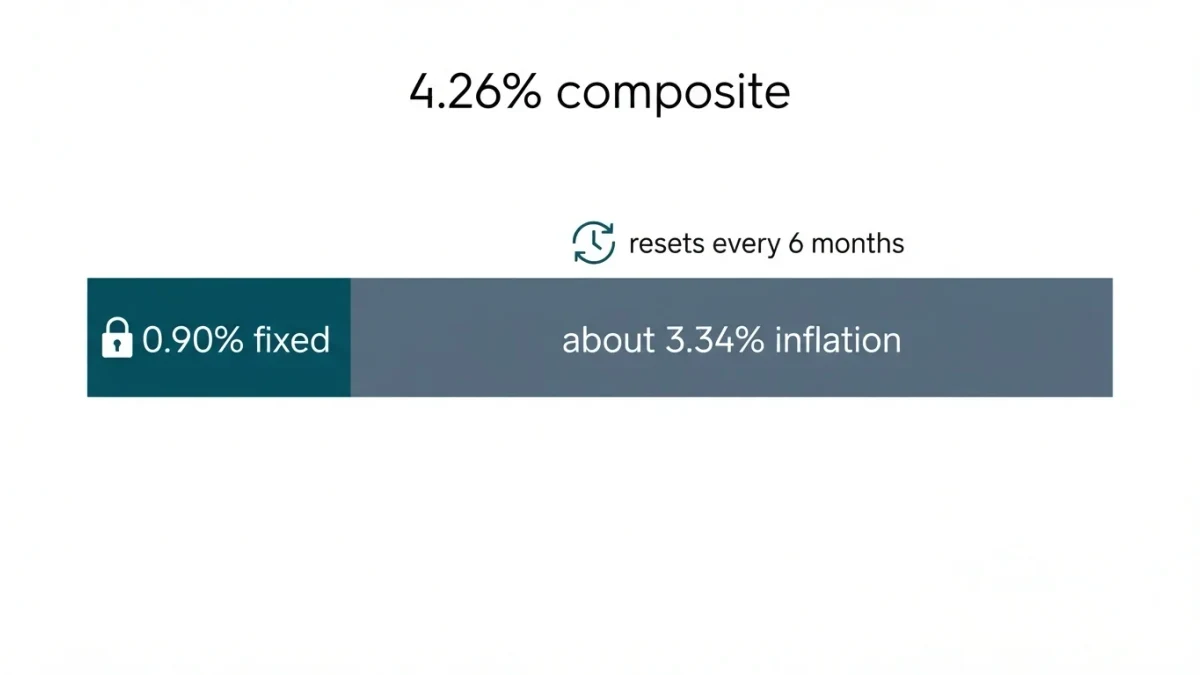
Series I savings bonds purchased between May 1 and October 31, 2026 will earn a 4.26% annualized composite rate for their first six months, up from the previous 4.03%, per TreasuryDirect. The rate has two parts: a 0.90% fixed rate that stays with the bond for its entire 30-year life, and a semiannual inflation component of about 3.34% that resets every six months with the CPI. The fixed rate — near its recent highs — is the part that makes this particular issuance notable for long-term holders.
How the two parts work
The fixed rate is locked at purchase forever; the inflation component adjusts every May and November for every outstanding bond. A bond bought today earns 4.26% for six months, then follows future inflation readings plus its permanent 0.90%. That structure is the appeal: the purchasing power is protected by design, and the fixed layer adds a guaranteed real return on top.
What are the rules that matter?
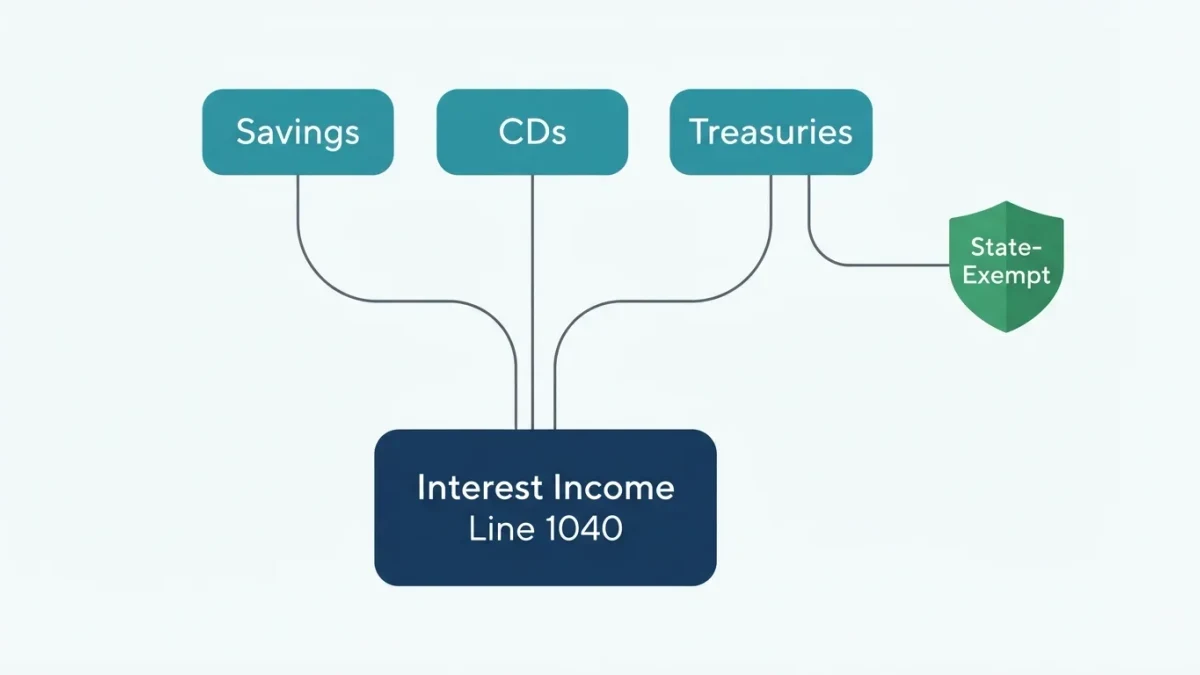
Four constraints define the product. Purchases are capped at $10,000 per person per calendar year on TreasuryDirect, with a $25 minimum. The bond is illiquid for its first year entirely. Redeeming within five years forfeits the last three months of interest. And federal tax on interest can be deferred until redemption, while state and local tax never applies — a genuinely useful edge in high-tax states.
Who do they suit?
Savers holding money they will not need for at least one to five years, who want inflation protection with a government guarantee rather than a market return. They complement — not replace — an emergency fund in liquid savings, since the one-year lock is absolute. In a portfolio, the $10,000 annual cap also makes them a supplement to, not a substitute for, retirement contributions.
FAQ
What if inflation falls — does my 4.26% disappear?
The composite rate resets with inflation every six months, so a cooling CPI lowers it — but never below the 0.90% fixed floor. Deflation can zero the inflation part, and the fixed rate keeps paying.
Should I redeem an older I bond to buy this one?
Only after comparing fixed rates: older bonds carry their own permanent fixed components, and switching forfeits three months of interest inside the five-year window. Redeem bonds with 0% fixed rates before bonds with meaningful ones.