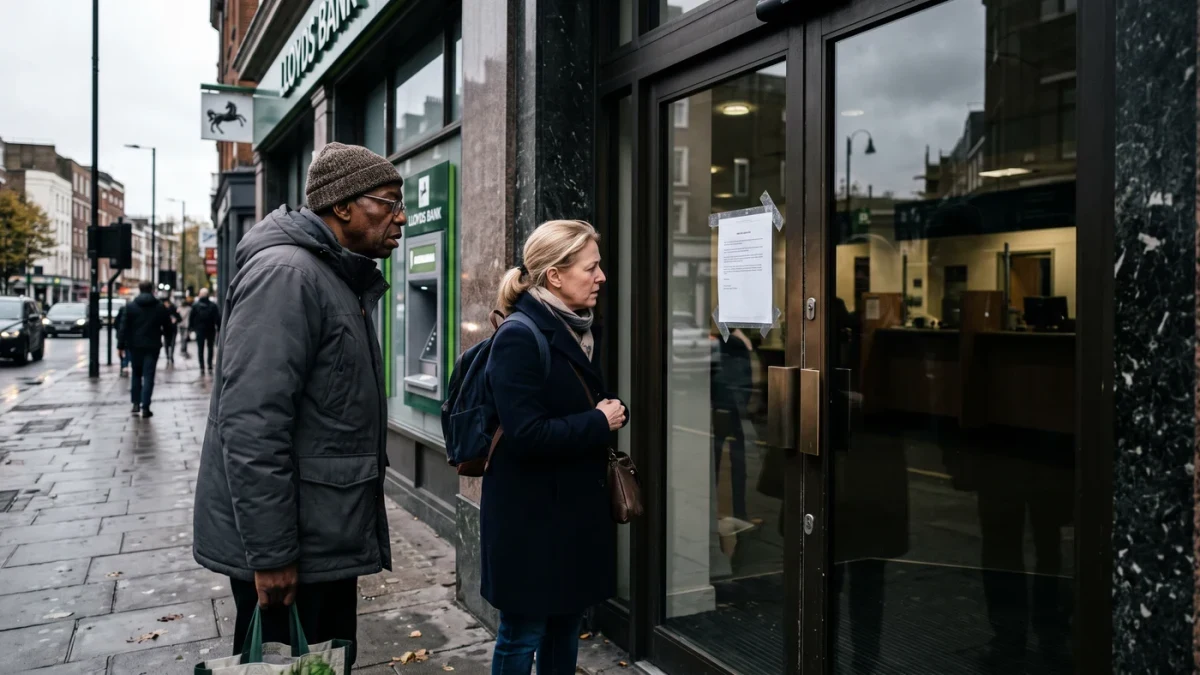

When your bank merges or is acquired, the combined institution cuts costs by closing overlapping branches, retiring one of the two brands, and migrating accounts onto a single system — and every one of those steps reaches your money. The Capital One–Discover combination completed in 2025 showed the pattern at national scale: customers stayed put while account terms, card arrangements, and branch footprints moved around them. Mergers accelerate when rates fall and loan profits thin, so the wave of regional bank combinations of 2025 and 2026 is not random — it is the industry's arithmetic, and your job as a customer is to notice which parts of the deal land on you.
Why do banks merge at all?
Scale. Running compliance, fraud systems, and mobile technology costs roughly the same whether a bank holds $10 billion or $100 billion in deposits, so growth by acquisition spreads those fixed costs. Falling net interest margins — the gap between what banks earn on loans and pay on deposits, which narrows when the Fed cuts — push mid-size banks toward each other for efficiency. The result observed through 2025–2026: steady announcements of regional combinations, each pitched to investors as cost-synergy stories, with customer-facing changes buried in the appendices.
What actually changes for you?
| Area | Typical merger effect |
|---|---|
| Branches | Overlapping locations close; the surviving network is thinner |
| Account terms | Fee schedules and minimums reissued under the new bank |
| Rates | Deposit rates often converge downward toward the acquirer's |
| Cards | Card programs may switch networks or rewards structures |
| Digital access | Old app retired; logins, bill pay, and alerts re-established |
| Insurance | FDIC coverage continues, with transitional rules for doubled deposits |
The deposit-rate line deserves attention: the acquired bank's competitive APY is a cost the new owner usually retires quietly at conversion, so a high-yield account can silently become an average one the month the name changes.
What happens to FDIC insurance in a merger?
Coverage continues at the surviving bank, and FDIC rules give merged deposits a transition: deposits that would exceed $250,000 per depositor per ownership category because two banks combined remain separately insured for six months after the merger — through maturity for certificates of deposit. Households holding large balances at both institutions should use that window to restructure accounts across institutions or ownership categories, and the FDIC's own merger guidance pages spell out the timing.
What should you do when your bank is bought?
- Read the conversion kit — the booklet arriving before the switch lists the new fee schedule, new routing and account numbers, and the exact cutover weekend.
- Note every autopay and direct deposit tied to the old details, and confirm each one survives the migration.
- Compare the new deposit rate against the market on cutover day; if the APY fell, online banks will outbid it within an hour of searching.
- Watch the card terms — a network or rewards change can make a different card the better everyday carry.
- If a closing branch was your banking relationship's anchor, decide deliberately whether to follow the bank or move to a credit union or online bank that fits the new geography of your life.
Do mergers ever improve things for customers?
Occasionally — broader ATM networks, better mobile apps, and expanded product menus arrive when the acquirer's platform is stronger. Card customers sometimes gain network acceptance. But the improvements concentrate in infrastructure while the costs concentrate in intimacy: branch closings hit older customers and small businesses hardest, and the double-digit share of branches typically eliminated in overlapping markets turns a five-minute errand into a drive across town. Price the trade honestly for your own habits.
FAQ
Do I have to do anything when my bank merges?
Usually only at conversion: re-verify autopays, direct deposits, and login credentials under the new system. Doing nothing else is fine — but doing nothing at all risks missed payments in the cutover month and a worse rate thereafter.
Can I opt out of a merger?
Not by staying — the deal happens at the corporate level. Your opt-out is moving your money: accounts are portable, and moving before the cutover avoids the migration entirely if the new bank's terms already look worse.
What if my deposits exceeded the insured limit across the two banks?
Use the six-month transitional window the FDIC provides after a merger: split the combined balance across institutions or retitle accounts into different ownership categories so every dollar sits inside a separate $250,000 coverage bucket.