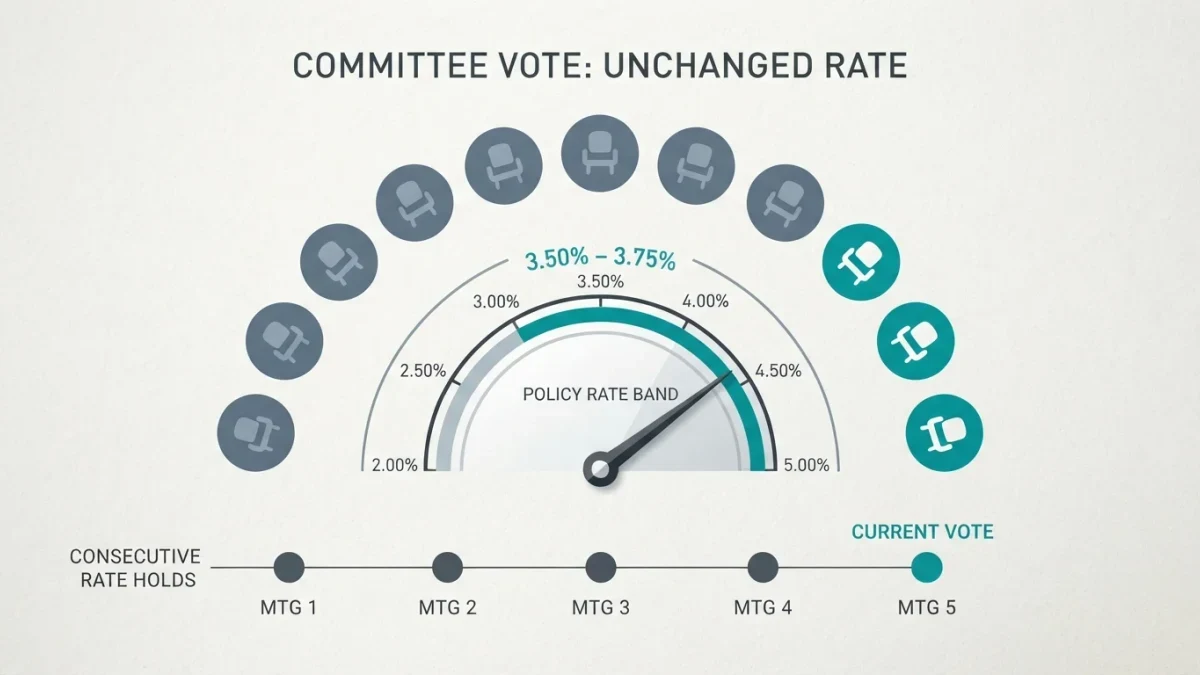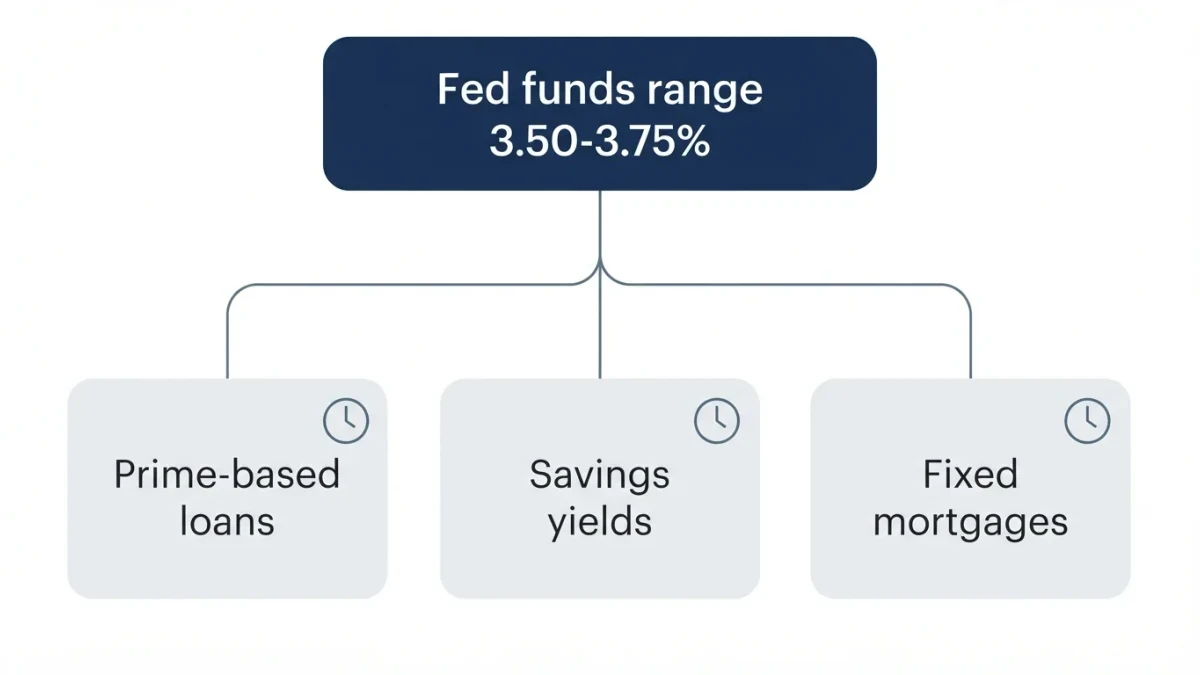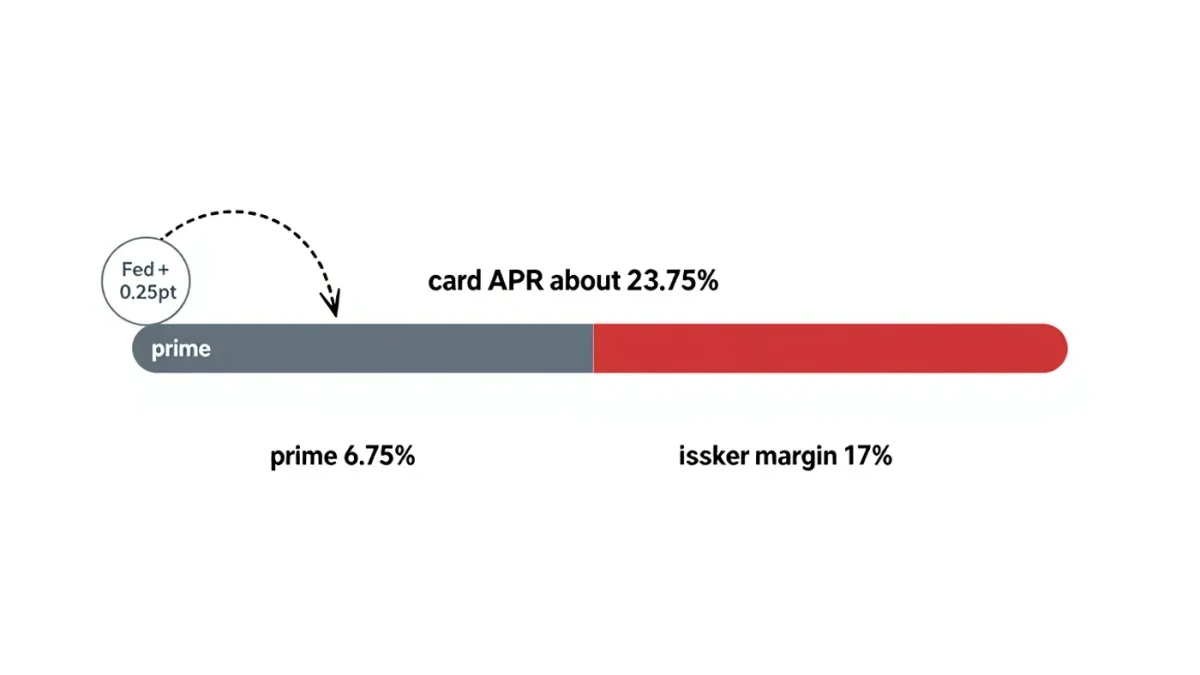
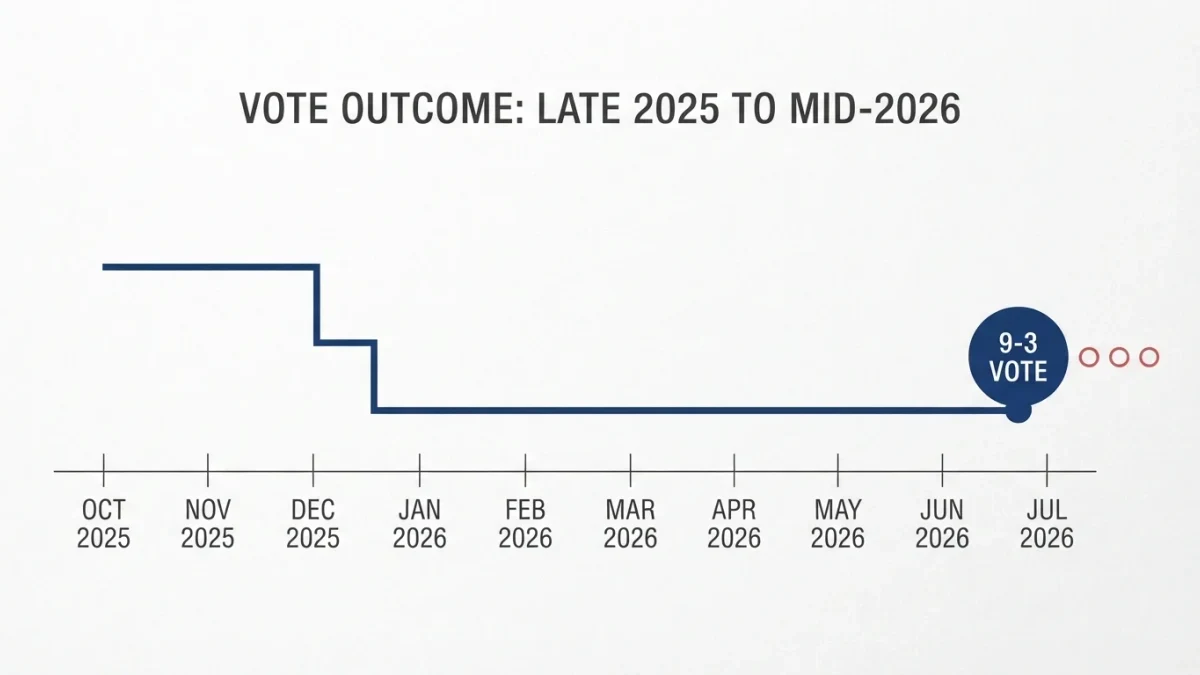
The Federal Reserve held its federal funds target range at 3.50%–3.75% after its July 29, 2026 meeting, per the Federal Reserve's meeting materials — the range set by the December 2025 cut and unchanged through every 2026 meeting since. What made this decision different was the vote: a 9–3 split, with dissents wide enough that some officials were projecting a rate hike ahead rather than cuts, an unusual public display of disagreement about the direction of policy. For savers and borrowers, the range means another stretch of roughly 4% top savings yields and card APRs still in the 20s.
SAMCASH publishes information, not financial advice — rate exposure differs by household, and no Fed decision changes the priority order of your own plan.
Why does a split vote matter?
Because it maps the committee's disagreement. Unanimous holds signal patience; lopsided votes signal a committee circling a real decision. Dissents in the direction of hikes — rare when inflation is merely above goal rather than accelerating — tell markets the bar for future cuts is higher than the December easing implied. That repricing shows up within days in Treasury yields, mortgage pricing, and expectations embedded in futures, well before any actual policy move.
What has the Fed been watching?
The same two gauges it has watched all year: inflation, which eased to a 3.5% annual pace in the June CPI report released July 14 yet remains well above the 2% goal; and growth, which held near a 2% annualized pace in the first quarter per Bureau of Economic Analysis estimates. The combination — cooling-but-above inflation with steady growth — is precisely the mix that argues for holding: no urgency to cut, no case to hike, and a committee that splits over which risk it fears more.
What should you do with another hold?
Use the stability rather than waiting for a move. Savers: top online accounts near 4% APY remain the yield on cash, and locking longer CD or Treasury terms preserves today's rates if the hike-side dissenters ever win. Borrowers: card APRs stay in the 20s regardless, so the case for paying down high-rate balances never depended on the Fed; mortgage shoppers price off the 10-year Treasury, where the split-vote signal landed directly. And planners: a hold streak this long makes the autumn meetings the live ones — watch the September projections, not this statement, for the direction of travel.
FAQ
When could rates actually move again?
Markets price the next move from each meeting's projections — after a 9–3 hold with hike-leaning dissents, the bar for a cut is demonstrably high. The September meeting, with its updated economic projections, is the next scheduled checkpoint with real information content.
Does the hold affect my savings account?
Only at the margin — with the Fed on hold, online-bank APYs stay near current levels and branch-bank rates stay near zero, so the gap between competitive and complacent accounts persists. Switching to a top-paying account remains the highest-paying chore available.