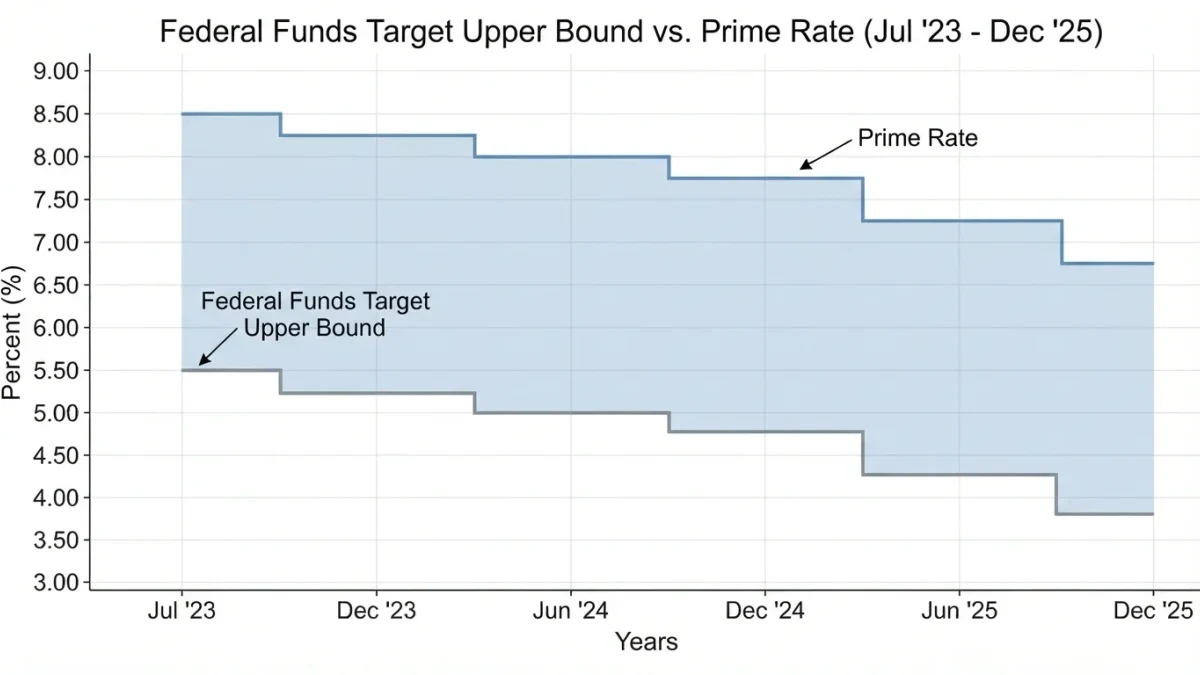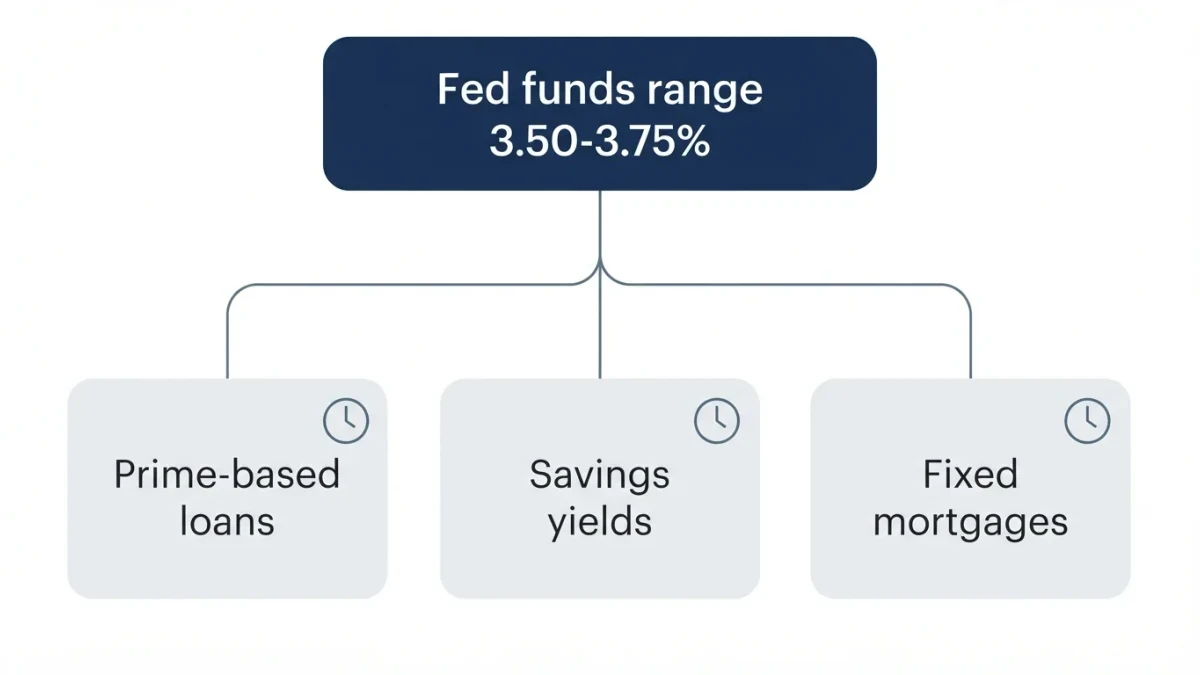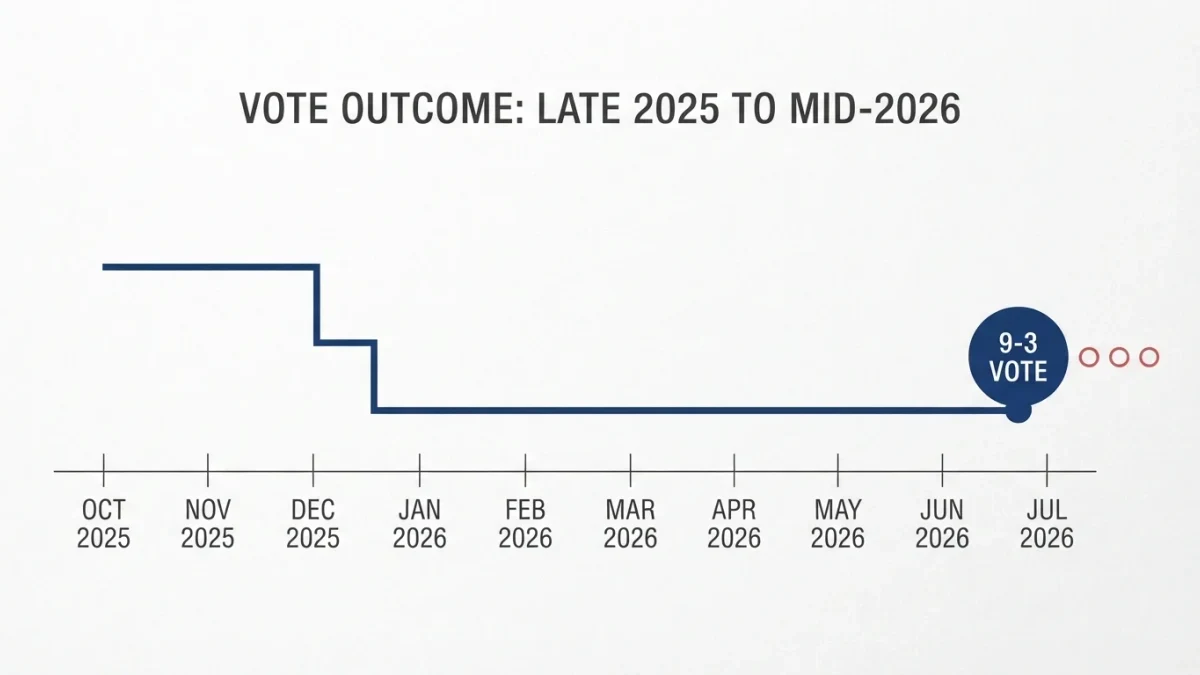

The Federal Reserve cut its federal funds target range by a quarter point to 3.50%–3.75% on December 10, 2025, its last move of the year. Per the Federal Reserve's implementation note, the new range took effect December 11. For households, one cut changes almost nothing overnight — but it nudges every rate you earn and pay, in different directions and at different speeds.
SAMCASH publishes information, not financial advice — rate moves affect every household differently depending on its mix of savings and debt.
What happens to savings rates?
Savings rates follow the Fed downward, online banks first. If you are earning around 4% APY at an online bank, expect the yield to drift lower in the weeks after a cut; if your money sits in a big-branch account paying near the national average — well under 1% — it was barely earning before and will barely notice. Moving idle cash to a competitive account matters more than any single Fed decision.
What about credit cards and loans?
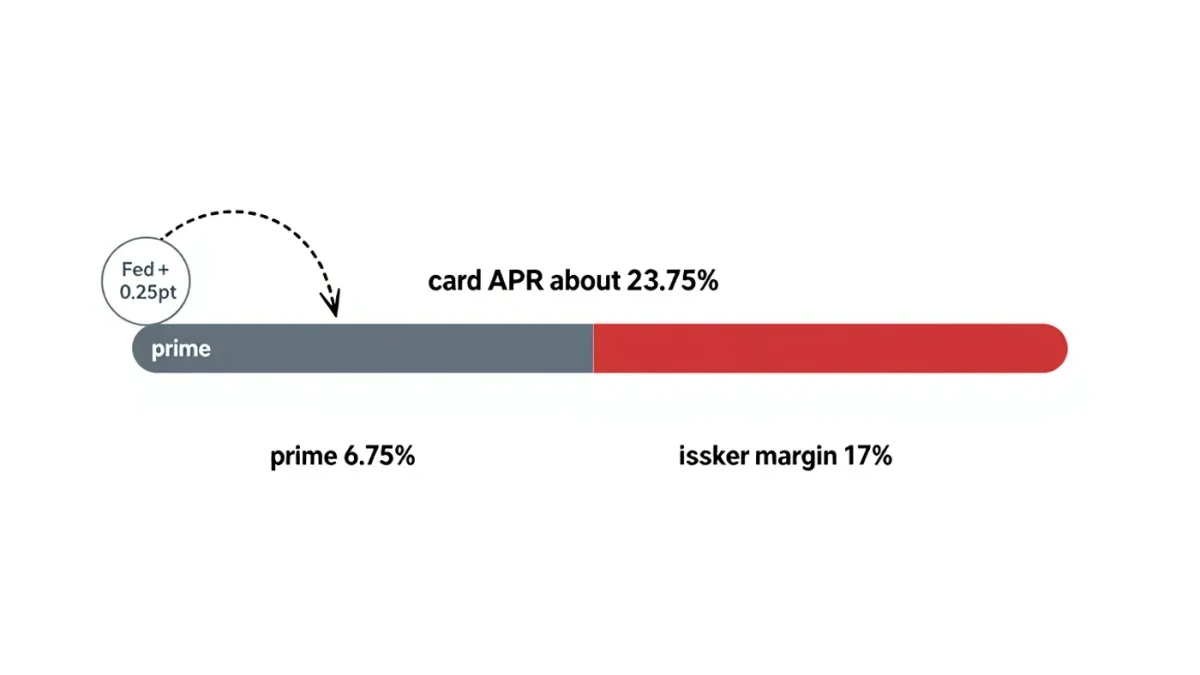
Card rates barely move. Credit card APRs sit far above the fed funds range, and a quarter-point cut trims the prime rate only slightly — a card at 24% APR becomes roughly 23.75%. Variable-rate private student loans and HELOCs reprice faster, and new fixed-rate mortgages price off longer-term bond yields, not this decision.
What should you actually do?
Three moves make sense after any cut. Lock savings you will not need for months into a certificate of deposit before yields fall further. Keep paying high-rate card debt aggressively, because its cost stays high regardless. And if you have been waiting to refinance variable debt, compare offers now — one cut is a nudge, not a window that closes.
FAQ
Will my bank lower my savings rate automatically?
Usually yes, and online banks tend to move within days to weeks. Your notice may be a quiet rate change rather than an email, so check your APY monthly and move money if it falls behind competing accounts.
Does a Fed cut lower my mortgage rate?
Not directly. Fixed mortgage rates track long-term Treasury yields and inflation expectations, not the overnight rate. Variable-rate home equity lines reprice much faster, usually within one or two billing cycles.