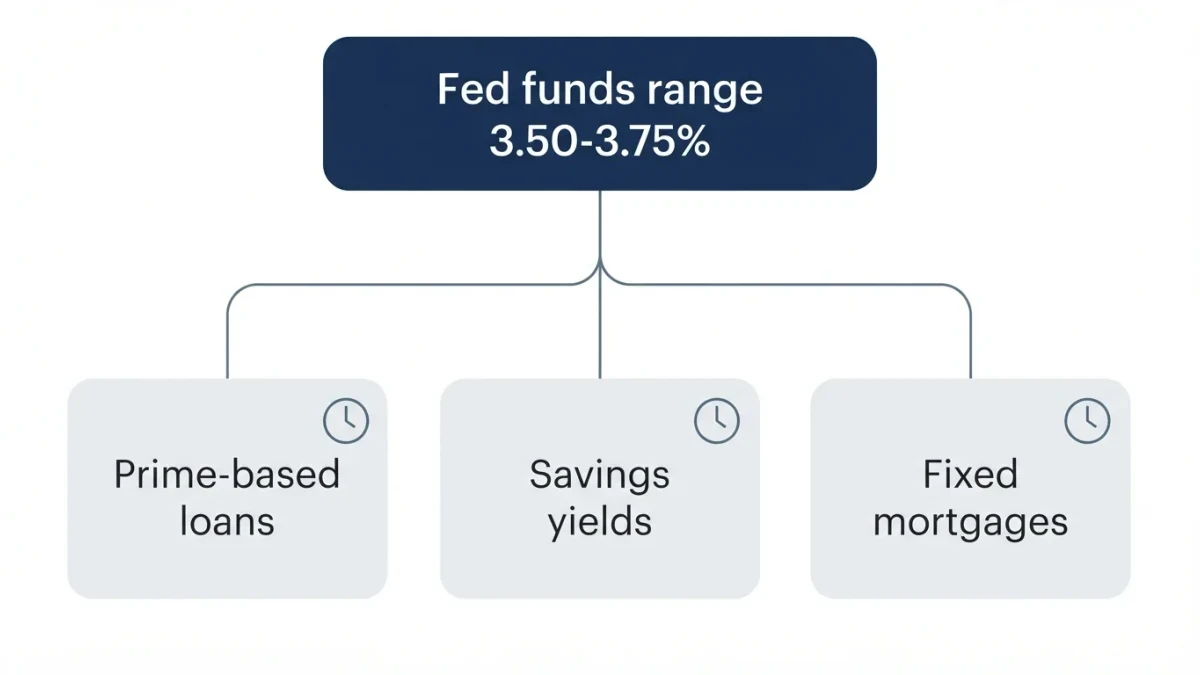
The Federal Reserve sets interest rates through the Federal Open Market Committee — the FOMC — which holds eight scheduled meetings a year and votes on a target range for the federal funds rate, the rate banks charge each other for overnight cash. Following its December 10, 2025 cut, the target range stands at 3.50%–3.75%, per the Federal Reserve. That single range is the anchor for nearly every short-term rate you earn or pay, which is why a two-day meeting in Washington can move a savings account in Topeka.
SAMCASH publishes information, not financial advice — rate policy affects every household differently depending on its mix of savings and debt.
What is the federal funds rate, exactly?
It is the price of overnight money between banks. Banks must hold reserves; some end the day short, others long, and the fed funds rate is what the short ones pay the long ones. The Fed does not dictate this rate by decree — it steers it by paying interest on the reserves banks park at the Fed and by adjusting the supply of reserves through open-market operations, so the market rate settles inside the announced range. When you hear the Fed raised or cut rates, the accurate picture is that it moved the corridor in which this overnight rate lives.
What is the committee trying to achieve?
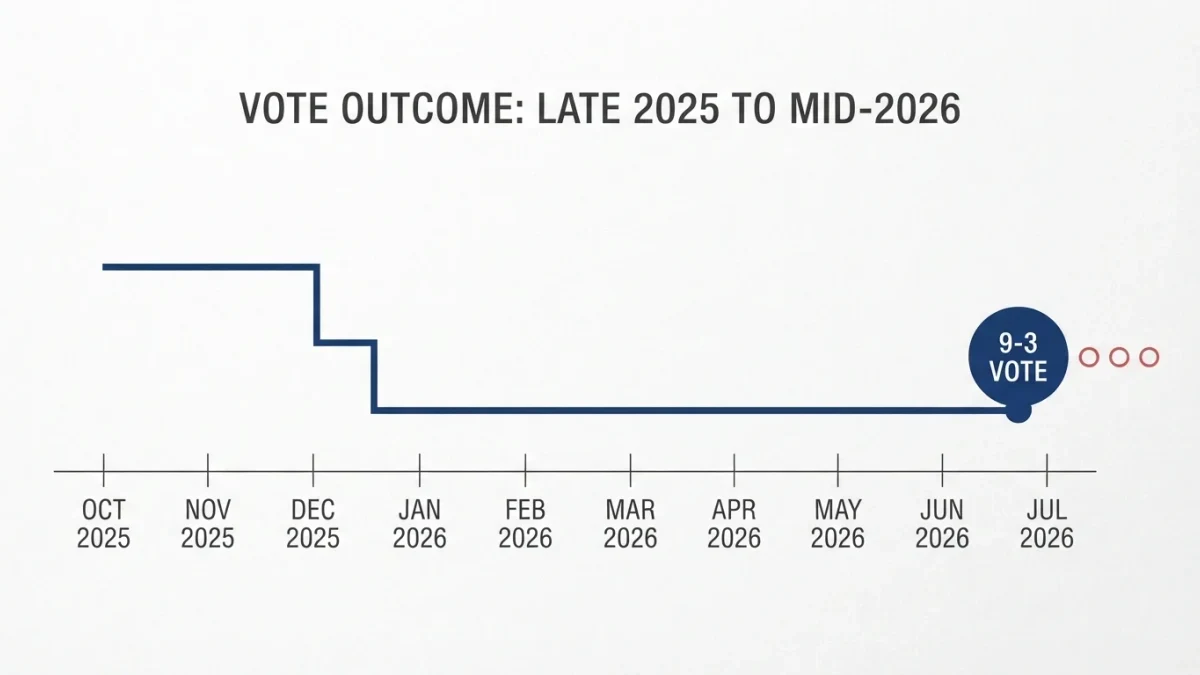
Congress gave the Fed a dual mandate: maximum employment and stable prices, which the Fed operationalizes as inflation around 2% over time. When inflation runs hot, the FOMC raises the range to make borrowing dearer and slow demand; when the economy weakens, it cuts to make credit cheaper. The committee watches inflation, jobs, wage growth, and financial conditions, and its statements are deliberately watched word by word for hints about the next move. Dissents are public — votes are not unanimous lockstep, and divided counts, like the ones appearing in 2026 meetings, signal genuine debate about direction.
How does one overnight rate reach your wallet?
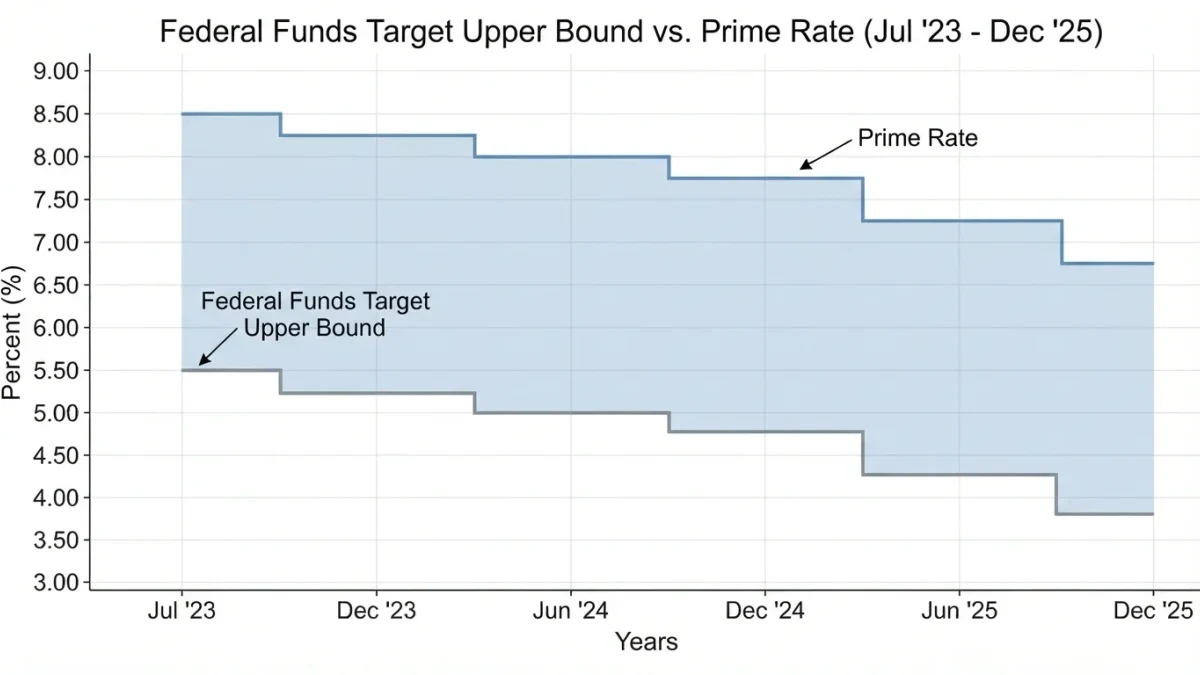
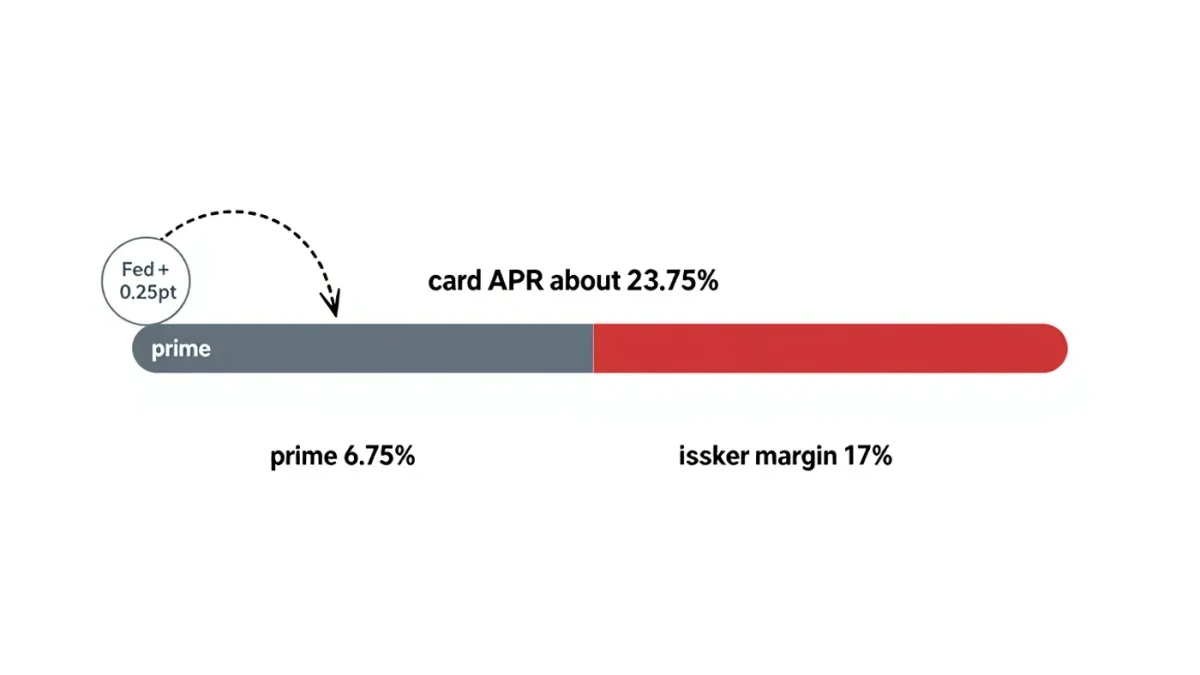
Through a chain of repricing. The prime rate — the base for card APRs, HELOCs, and many private student loans — sits roughly 3 percentage points above the top of the fed funds range and moves almost in lockstep with it. Savings and money market yields follow competitively but at banks' discretion: online banks reprice fastest because they compete on rate, branch banks slowest because they compete on convenience. Mortgages price off 10-year Treasury yields and inflation expectations instead, which is why mortgage rates can fall while the Fed holds — or rise while it cuts.
| Rate you actually pay or earn | Follows the Fed funds range? | Typical lag |
|---|---|---|
| High-yield savings APY | Yes, loosely | Days to weeks |
| Credit card APR | Yes, via prime | One to two billing cycles |
| HELOC and private student loans | Yes, via prime | One to two cycles |
| 30-year fixed mortgage | No — tracks long-term Treasuries | Independent path |
| Auto loan APR | Partially | Weeks, plus credit-tier spreads |
Why does the Fed hold rates steady for months?
Because policy works with a lag. A single cut needs a year or more to fully pass through housing, wages, and spending, so the committee often waits to see the effect of previous moves before adding another. Through the first half of 2026 the FOMC held the 3.50%–3.75% range after the December 2025 cut — a patient stance that tells households the rate environment is stable enough to plan around, even if not every rate is where they would like it.
FAQ
Does the Fed set my bank's savings rate?
No — your bank does. The Fed moves the overnight anchor, and each bank prices deposits off it according to its own need for funding and its competition. That is why the same Fed decision produces a 4%-plus APY at one bank and 0.4% at another.
Why do markets react to Fed meetings?
Because the statements and projections hint at the path of future rates, which reprices stocks and bonds immediately. The meeting's vote changes today's range; the press conference changes what traders expect next year to look like.
Can the Fed president be voted out if I dislike rate policy?
Not by voters directly. The Fed chair is nominated by the President and confirmed by the Senate, and the agency's independence from elected politics is deliberate — the design tries to keep interest-rate decisions from following the election calendar.