
Diversification is the practice of spreading your investing money across many different investments instead of concentrating it in one. The point is not to boost your returns. It is to narrow the range of outcomes, so no single company, industry, or asset class can wreck your plans.
The trade-off is real and worth saying plainly: a diversified portfolio will never match the return of the single best-performing investment you could have picked. It will also never match the worst. Wikipedia's overview of financial diversification puts it that way directly — by diversifying, you give up the chance of having backed the one asset that comes out best, and you avoid having backed the one that comes out worst. For most households, that is a good deal.
What is diversification, exactly?
Diversification means allocating your money in a way that reduces your exposure to any one particular asset or risk. In plain terms: don't put all your eggs in one basket. If you own one stock and that company has a terrible year, your whole portfolio has a terrible year. If you own pieces of hundreds of companies, one bad year is a rounding error.
The mechanism behind this is correlation — how much two investments move together. When asset prices don't move in perfect sync, a diversified portfolio has less volatility than the weighted average of its parts. Sometimes it is steadier than even the least jumpy single holding. That is the whole trick: combining investments that stumble at different times.
It is worth being honest about what diversification does not do. As Fidelity's learning-center guide notes, diversification and asset allocation do not ensure a profit or guarantee against loss. A diversified portfolio can still lose money in a broad downturn. What it protects against is the single point of failure.
Why is one stock so risky?
Because a single company carries risks that have nothing to do with the stock market as a whole. A competitor can eat its lunch. A key product can flop. A lawsuit, a recall, or a scandal can hit overnight. None of these events tells you anything about the other 3,000-odd companies you could own instead.
It is not unusual for a single stock to fall 50% in one year, according to the Wikipedia overview cited above. A portfolio of 20 stocks picked from different industries, company sizes, and asset types is far less likely to fall that far, because trends in one industry or company class get offset by what is happening elsewhere. Diversification is not a hedge against a market-wide crash — that is what the other classic risk-reduction tool, hedging, is for — but it is very effective against company-specific disaster.
There is a behavioral benefit too. Big swings tempt people to sell at the worst moment. A steadier portfolio is easier to stick with through a rough patch, which may matter more than any single allocation decision. If you want to pressure-test your own reactions first, our guide to risk tolerance: how to figure out yours honestly walks through that.
How do you actually diversify?
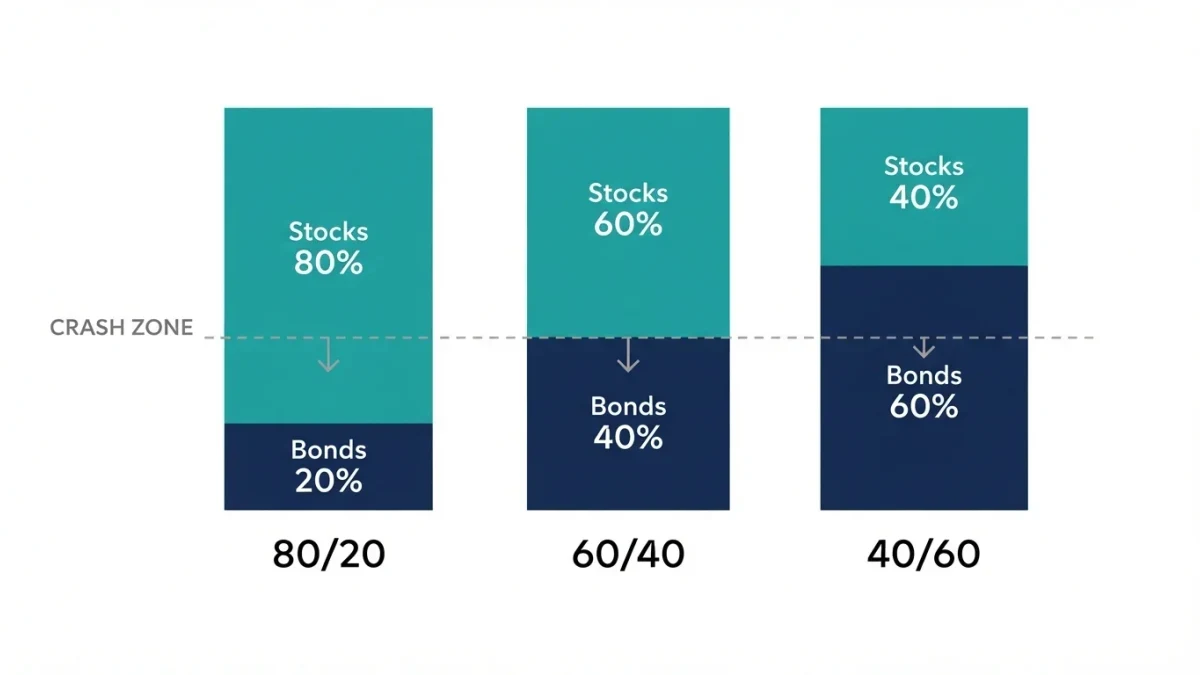
You diversify on two levels: among asset classes, and within them. Asset classes are the big buckets — stocks, bonds, and other categories. How you split money between those buckets is your asset allocation, and there is no one-size-fits-all mix; it should fit your goals, timeline, and temperament. Our piece on how to pick an asset allocation you can live with covers that decision in depth.
Within stocks, Fidelity's guide suggests spreading across several dimensions:
- Geography — US companies plus international ones.
- Company size — large, mid, and small companies (caps).
- Style — a mix of growth-oriented and undervalued (value) companies.
- Sector — tech, energy, health care, and the rest, rather than one favorite industry.
Within bonds, the same logic applies across issuer type (government versus corporate), maturity dates, and credit ratings. Highly rated issuers likely pay less interest; riskier ones likely pay more, so a blend is common.
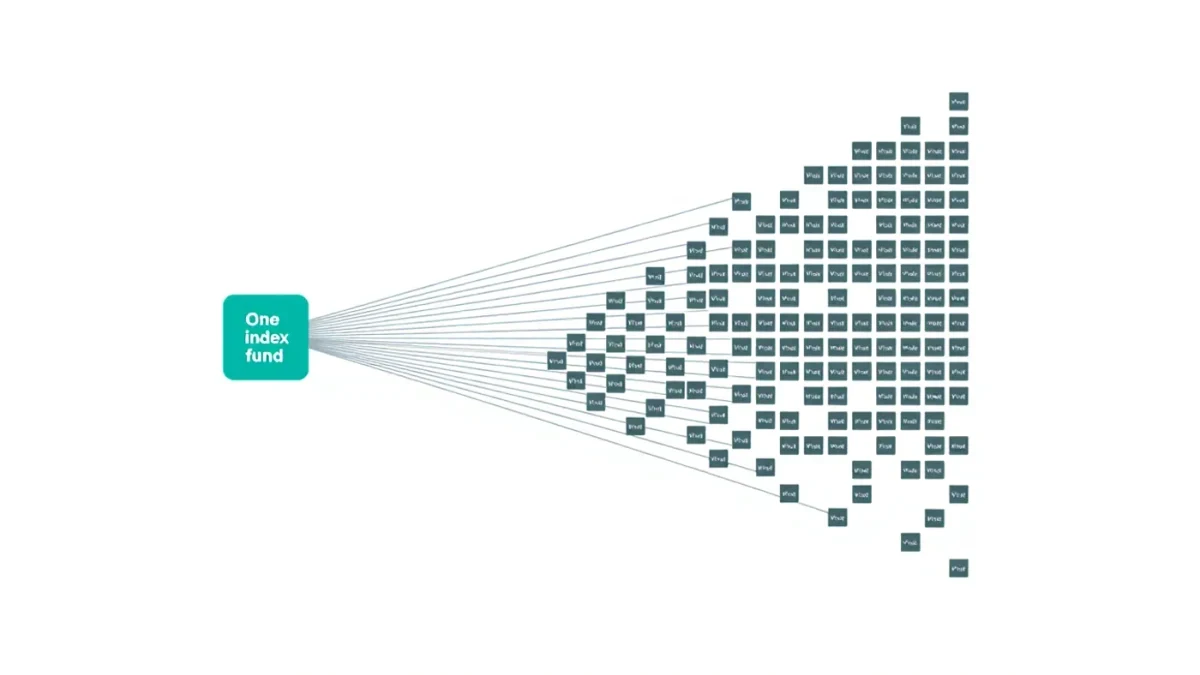
Doing all this by hand — picking each stock and bond yourself — is possible but a heavy lift. Fidelity notes that many individual bonds are sold with minimum face-value amounts of $1,000, which makes a hand-built bond portfolio especially impractical for most people. That is why funds exist. A single index fund or a broad ETF can own thousands of securities at once. If you are weighing fund types, our comparison of ETF vs. mutual fund: what actually differs breaks down the mechanics. And once you own funds, the fee you pay for them matters — see what a fund's expense ratio is, and how to find yours.
How many holdings is enough?
There is no magic number. Figures sometimes quoted run around 30 stocks, though it can be as low as 10 if they are carefully chosen across industries and company sizes. A 1985 book, cited in the Wikipedia entry, reported that most of the benefit of diversification comes from the first 15 or 20 different stocks in a portfolio. Beyond that, each added stock lowers volatility a little less than the one before.
Two caveats keep this honest. First, those counts assume the stocks are genuinely spread out — 30 tech companies is concentration wearing a costume. Second, more holdings can mean more costs to track, which is the modern version of the proverb's warning that owning many baskets has its own price. For most beginners, one or two broad funds solve the counting problem entirely.
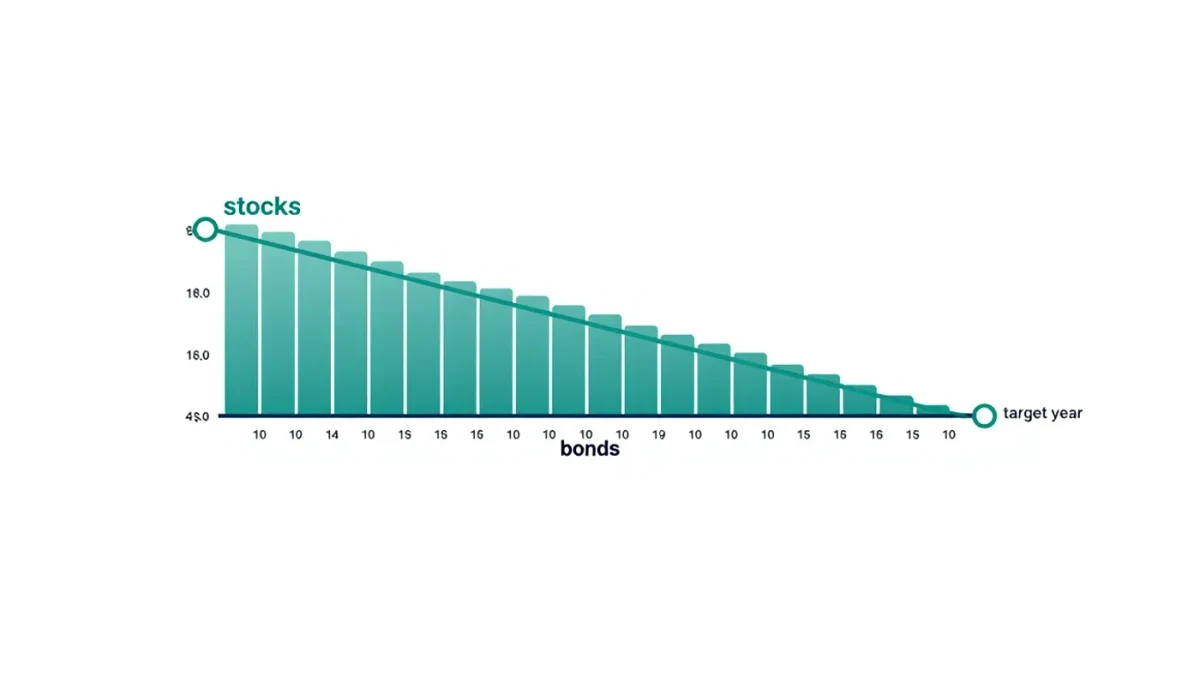
Other related tools slot in naturally. Asset allocation divides money among asset classes based on your goals and time horizon. Rebalancing means periodically adjusting the mix back to your target so one runaway holding does not quietly become your whole portfolio. Dollar-cost averaging — investing a fixed amount at regular intervals — reduces the impact of market volatility on your entry prices, and we explain it in what is dollar-cost averaging, and does it work?
What this means for your portfolio
Our analysis: for a household investor, the practical version of diversification is boring by design. Pick a stock-and-bond mix you can live with, get broad exposure through low-cost funds, and rebalance occasionally. The reward is not a bigger number at the end — it is a smaller chance of a number that ends your plan early.
If you are just starting out and the whole list feels heavy, start smaller. Our guide on how to start investing with $100 shows the first steps, and our Investing section covers the rest in order. Diversification is one of the few ideas in investing where the experts who disagree about nearly everything tend to agree on this. That is worth something.