
Risk tolerance in investing is how much of a drop in your portfolio you can sit through without selling at the worst possible moment. Most people overestimate it. A questionnaire asks what you would do in theory; a real market drop asks what you will actually do, and those answers are often different.
The honest way to figure out your risk tolerance is to test it against three things: your time horizon, your need for the money, and your gut reaction to losing money on paper. If any one of those says "slow down," your plan should slow down. This guide walks through each one, then shows how to prepare for the drop before it happens.
What does risk tolerance actually mean?
In finance, risk is usually described as the volatility of returns — how much your portfolio's value swings up and down. That framing goes back to modern portfolio theory, which treats risk and return as two sides of the same trade-off. According to Wikipedia's overview of risk, finance defines risk as the volatility of return, drawing on Harry Markowitz's 1952 work "Portfolio Selection," while the economist Frank Knight earlier drew a line between measurable risk and unmeasurable uncertainty.
That distinction matters for your household budget. Market history gives you a rough sense of how often stocks fall and by how much. It does not tell you how next year's drop will feel from inside your own life. Risk tolerance has a math side and a feelings side, and honest planning needs both.
It also has a cousin worth separating: risk capacity. Tolerance is psychological — how much pain you can absorb. Capacity is practical — how much loss your finances can absorb without derailing your goals. A 25-year-old with a steady job and an emergency fund has high capacity. The same person might have low tolerance if watching an account drop makes them lose sleep. Capacity should set the ceiling; tolerance explains why you might sit under it.
Why do questionnaires get it wrong?
Brokerages and robo-advisors use risk questionnaires for a good reason: regulators want them to match you to suitable investments. But the questions measure your imagination, not your behavior. "Would you sell if your portfolio fell 20%?" is easy to answer calmly on a Tuesday. It is much harder to answer in the moment, when the drop is on the news and your balance is down thousands of dollars.
Three things skew quiz answers:
- Optimism bias. People assume they will act rationally under stress. Most of us have evidence to the contrary from other parts of life.
- Fresh-memory effects. If markets have been calm, drops feel abstract, and everyone scores as aggressive. After a rough stretch, everyone scores as cautious.
- Aspirational answers. You answer as the investor you want to be, not the one who checks the app three times a day.
None of this makes the quiz useless. Treat it as a starting point, then cross-check it against the questions below.
What this means: the three-question self-test
Before you pick an asset allocation, answer these in writing. Writing matters — vague feelings are easy to inflate.
- When do I need this money? Money you will spend within the next few years — a house down payment, tuition — should not ride on the stock market, no matter how brave you feel. Money you will not touch for decades can wait out most drops.
- What loss would make me quit? Picture your account down 20%, 30%, 40%. At which number do you stop contributing, or sell? Your honest answer sets the ceiling on how much stock you should hold. If a 30% drop would break you, a portfolio that could plausibly fall that far is the wrong portfolio, whatever the quiz said.
- What is my backup plan if I lose income? An emergency fund in cash is what lets you leave investments alone during a downturn. Without one, a market drop and a job loss can arrive together, and forced selling turns a paper loss into a real one.
If your answers disagree with your questionnaire result, trust the written answers. They are closer to how you will behave.
How much risk is enough — and how much is too much?
Risk is not a virtue on its own. You take risk only to the extent a goal requires it. Money parked for retirement 30 years out probably needs growth that cash cannot provide. Money for next winter's heating bill does not. Matching the risk to the goal, rather than to your personality alone, keeps this from becoming a mood-based decision.
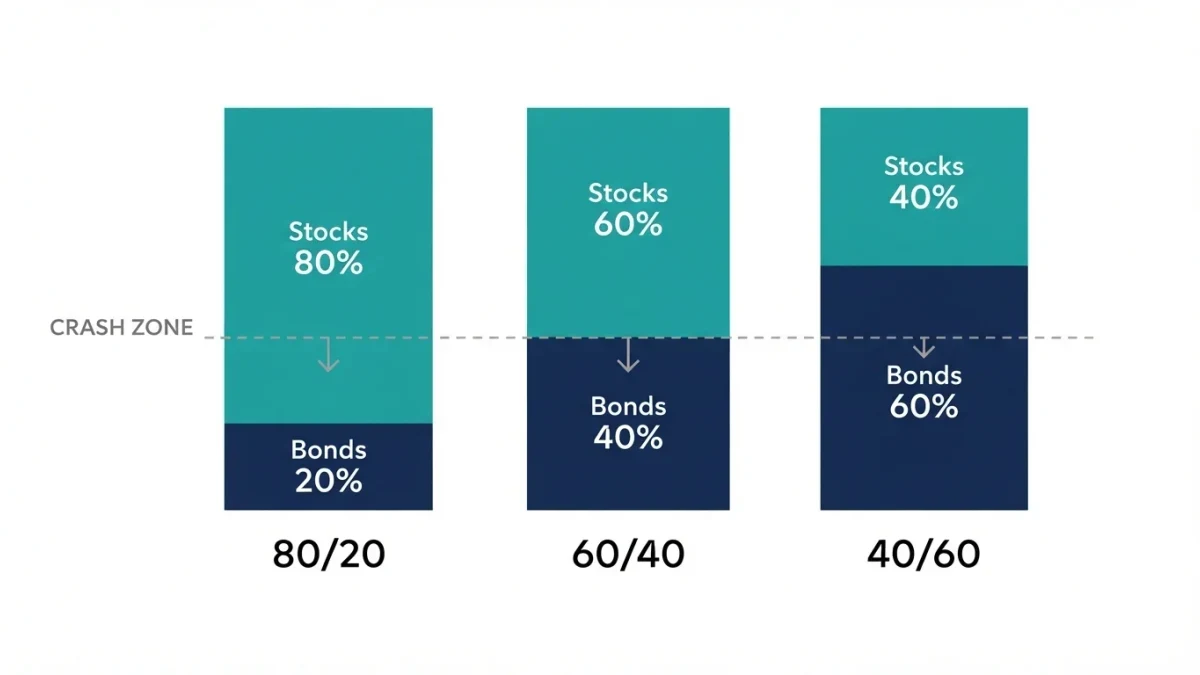
The practical lever is your mix of stocks and bonds. Stocks swing more; bonds swing less and pay steady interest. Our guide to what a bond is, and why households add them to savings covers the stabilizing role in detail. If you are not sure where to start, our piece on how to pick an asset allocation you can live with walks through the trade-offs.
One honest caution: a safer mix is not a no-risk mix. Cash loses ground to inflation over long periods, and bonds can lose value when interest rates rise. Every allocation trades one kind of risk for another. The goal is not to eliminate risk but to choose which kind you can live with.
How do you prepare for the drop before it happens?
Stated risk tolerance gets tested by real market drops. Preparation beats willpower. Four steps, in order:
- Write an investment policy for yourself. One paragraph: your target mix, what you will do when your portfolio falls, and what you will not do (sell everything, stop contributing). When the drop comes, you follow the note instead of your nerves.
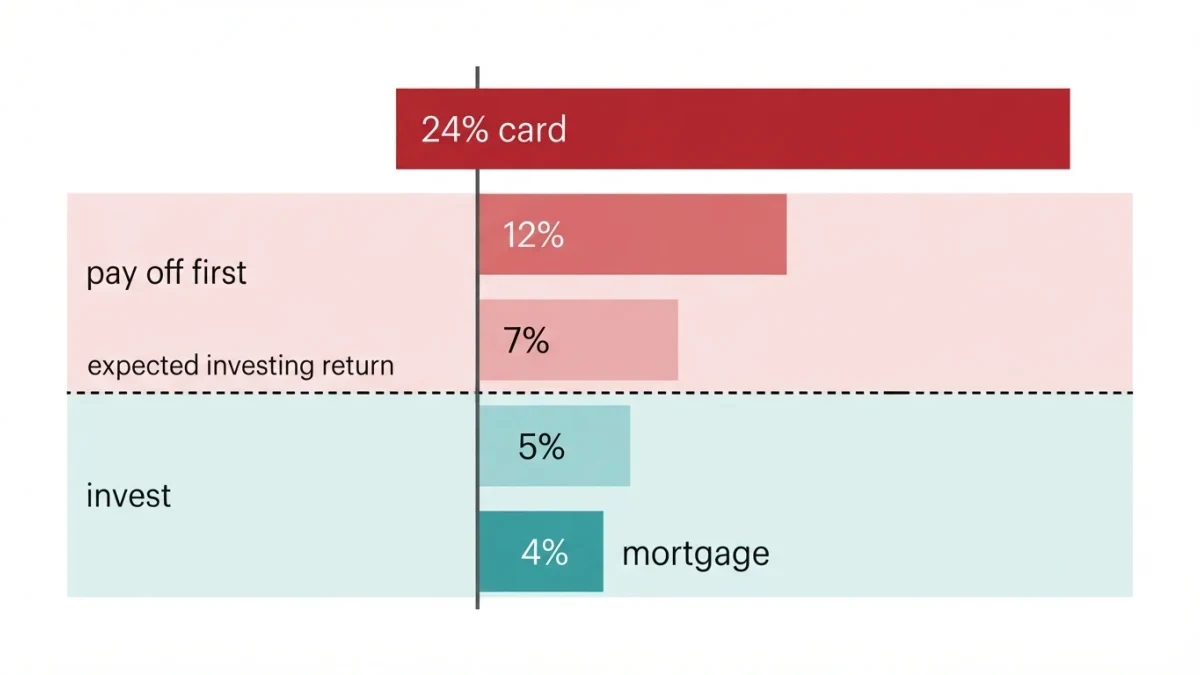
- Build the cash buffer first. An emergency fund is what makes "stay the course" possible. Our guide on whether to invest or pay off debt first covers how to sequence this when money is tight.
- Automate contributions. Investing a fixed amount on a schedule — dollar-cost averaging — removes the decision to time the market. See what dollar-cost averaging is, and whether it works.
- Rebalance on a calendar, not on a hunch. Selling winners to restore your target mix forces you to buy low and sell high mechanically. Our guide on rebalancing without panic selling shows how.
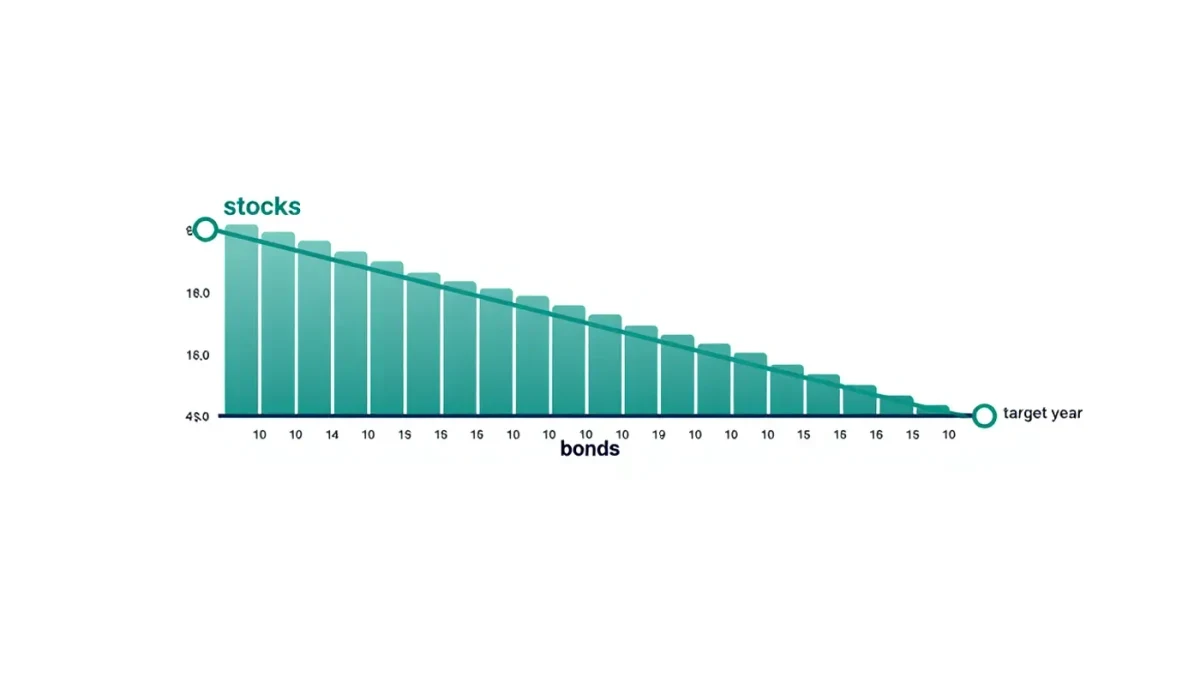
Beginners often find that a single all-in-one fund solves the mix problem entirely. A target-date fund adjusts its own stock-bond mix over time, and index funds keep costs low while you learn. If you are just starting, how to start investing with $100 covers the mechanics.
Our analysis: tolerance is a floor, not a target
Most advice frames risk tolerance as a dial to set once. Our reading of how households actually behave is different: treat your honest tolerance as a floor for planning, and revisit it only after real events — a drop you lived through, a job change, a new dependent. Your capacity will move with your life; your tolerance will move with your experience. A plan built on both is one you can keep through the drop, which is the only test that counts.
Outcomes depend on your situation, and every allocation involves trade-offs. If a decision is large or irreversible, a fee-only fiduciary adviser can look at your full picture.