You can start investing with $100 because two old barriers are gone: trading commissions at major brokers dropped to zero and fractional shares let you buy a slice of a fund instead of a whole share. What $100 buys is not a portfolio — it is the account, the automation, and the habit. Invested money is also risk money: balances rise and fall with markets, and any mention of crypto here means an asset whose price swings hard enough that losses are ordinary, not exceptional.
SAMCASH publishes information, not financial advice, and does not tell you what to buy — the categories below describe how the machinery works so you can choose for yourself.
Before the first $100 — what comes first?
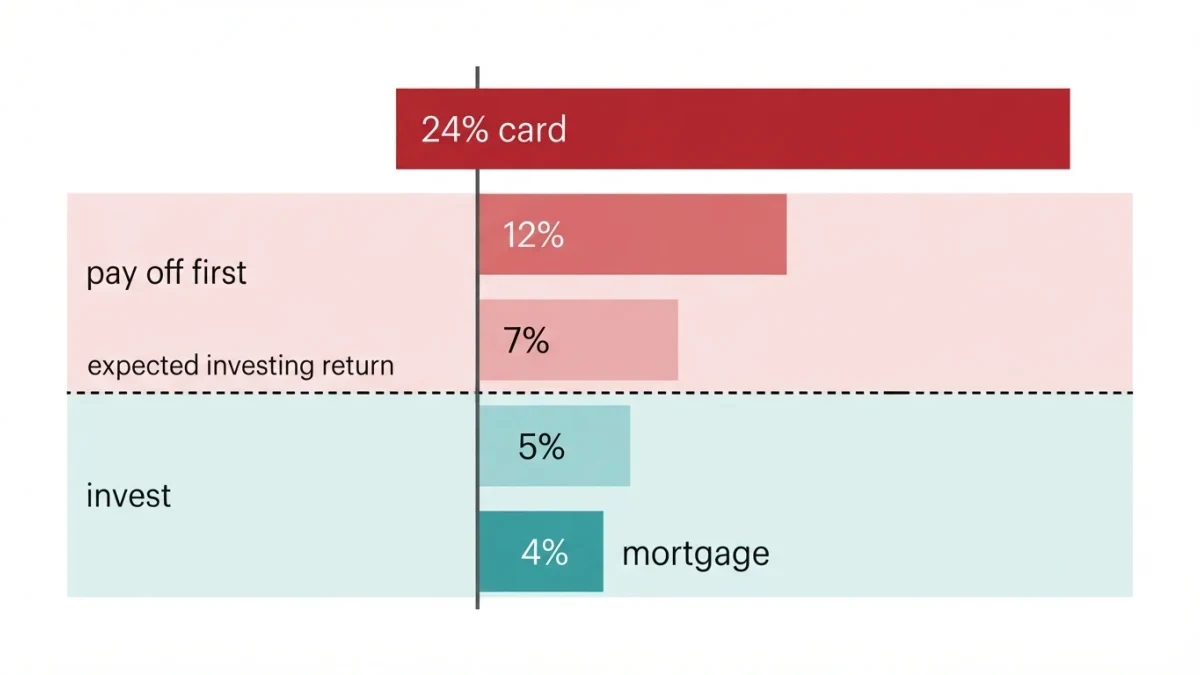
Cash and expensive debt outrank investing. A starter emergency reserve and any credit card balance costing 20% or more should come first, because no diversified portfolio reliably earns 20% after tax while a card reliably charges it. If your employer matches 401(k) contributions, that match is also ahead of a personal account — it is an immediate, guaranteed addition no market offers. After those, $100 is enough to begin.
Where does the first $100 actually go?
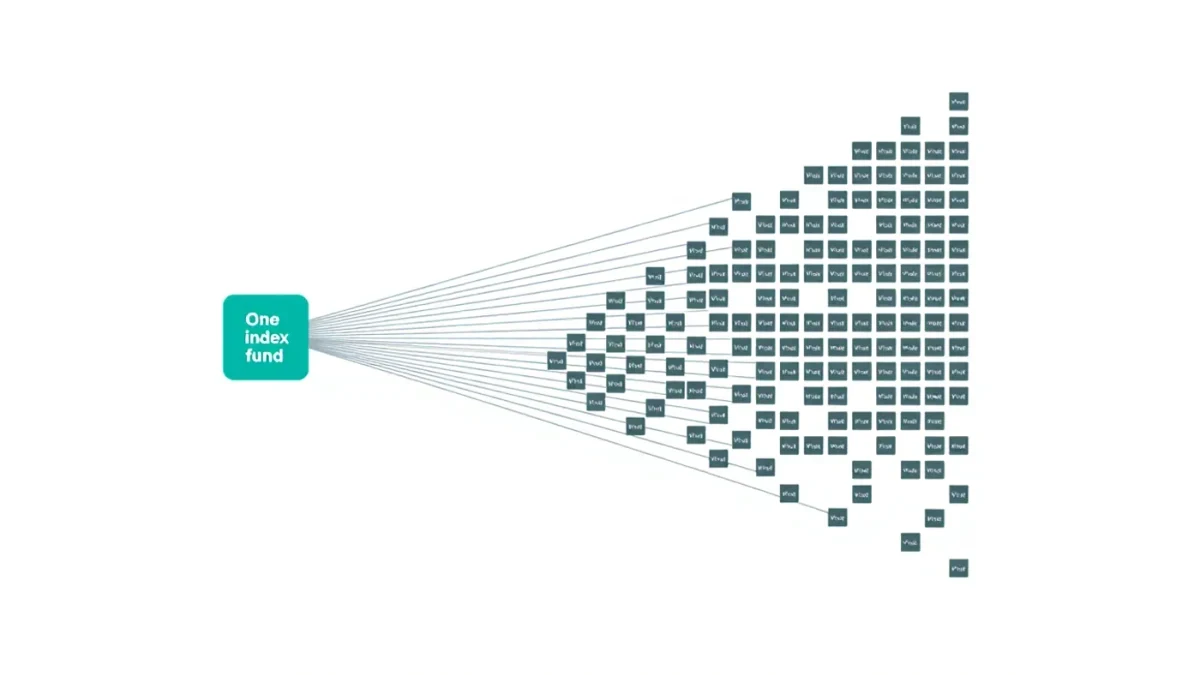
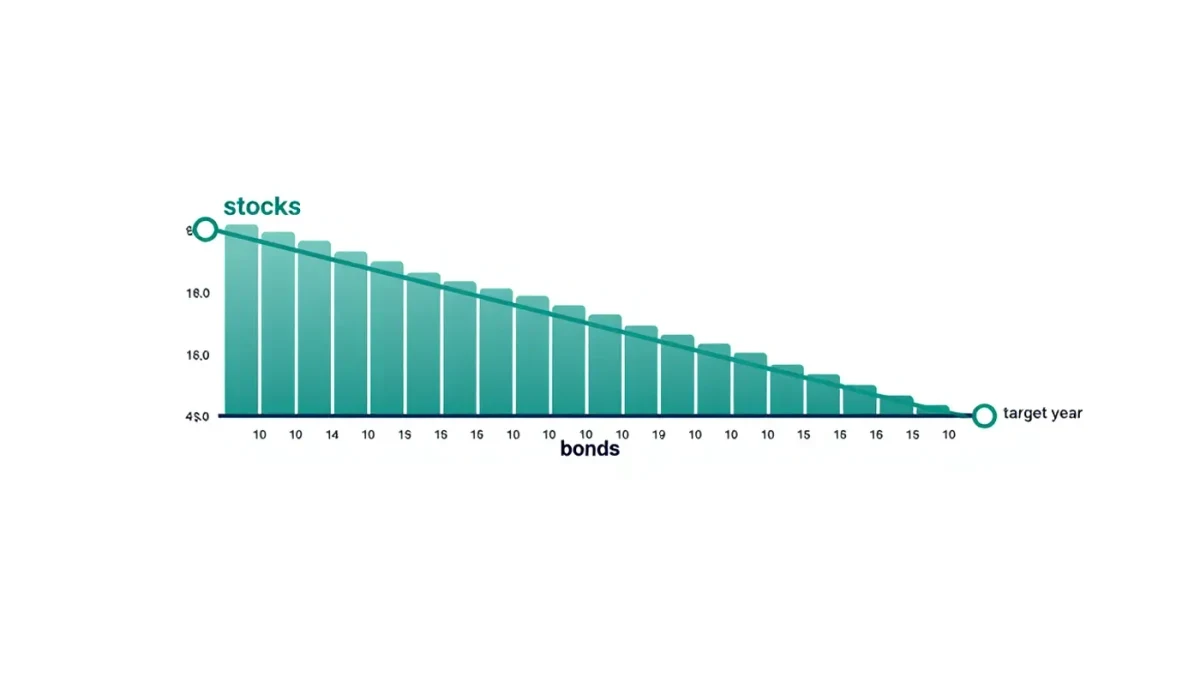
Into a broad, diversified fund inside a brokerage or IRA account. For beginners the practical menu is short: a total-market or large-company index fund or ETF, which owns hundreds of companies at once; or a target-date fund that mixes stocks and bonds by your expected retirement year. Funds spread one purchase across the whole market, so no single company's bad year dominates your result. Check two numbers before choosing: the expense ratio — the fund's annual fee, where lower is simply better — and the minimum investment, which many funds have scrapped entirely.
What does $100 a month become?
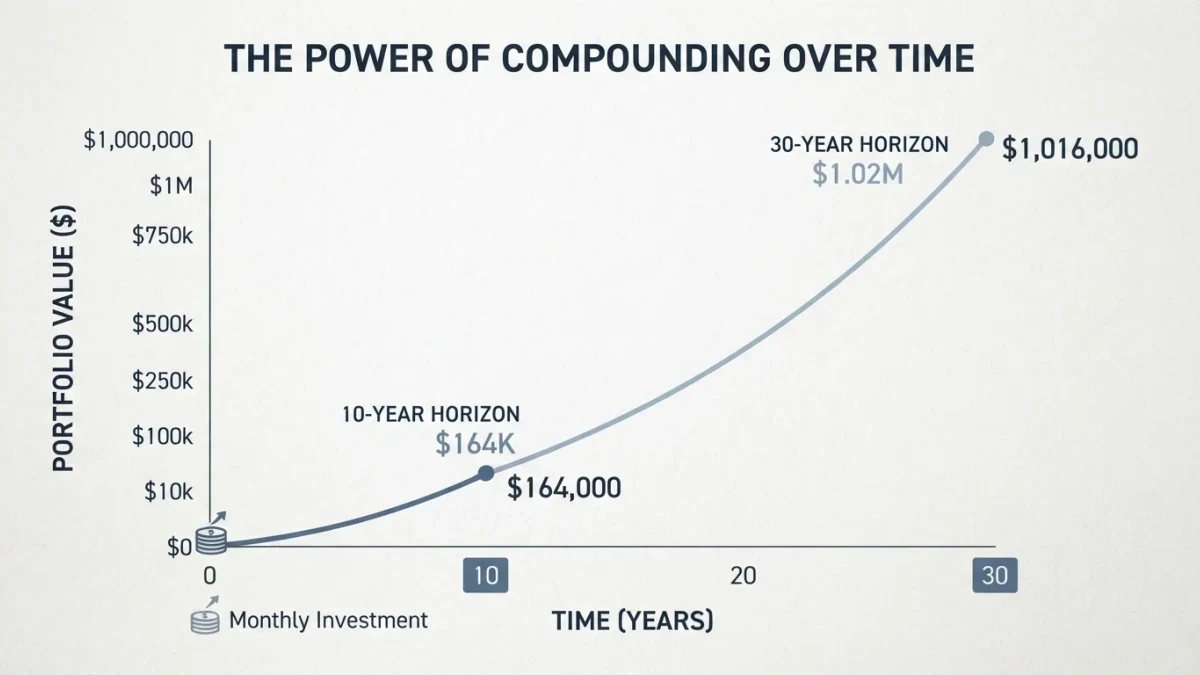
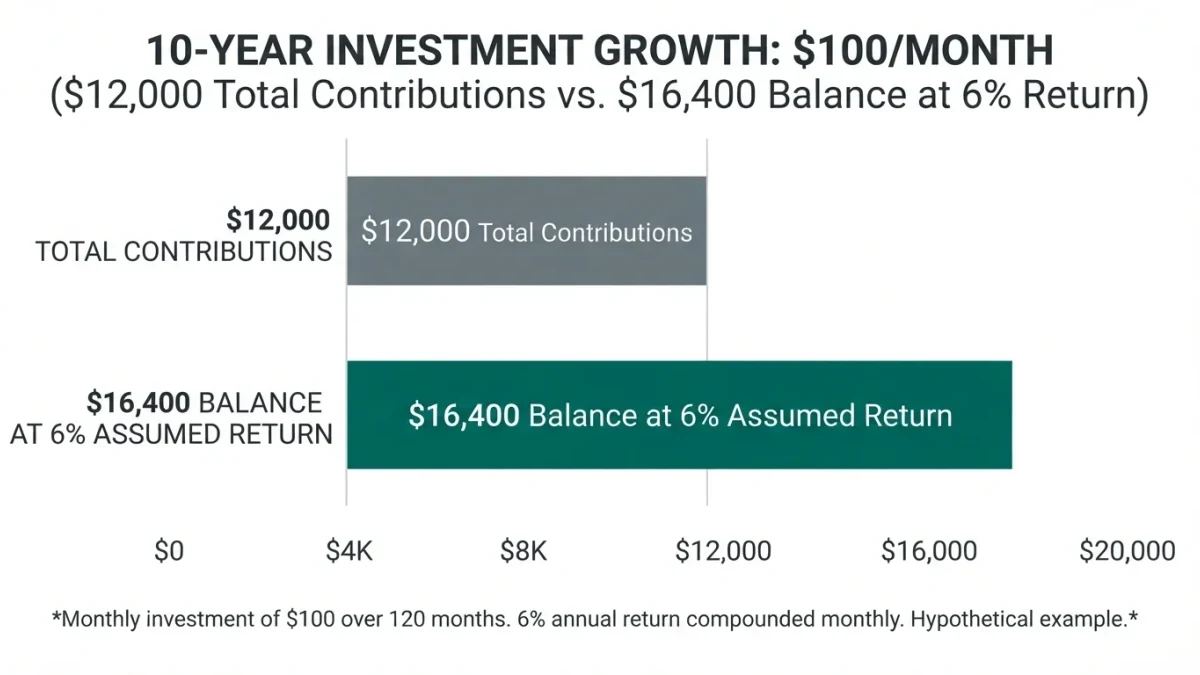
Use a conservative worked example with stated assumptions: $100 invested every month for ten years at an assumed 6% average annual return, compounded monthly, grows to about $16,400 — the future value of $100 × [(1.005¹²⁰ − 1) ÷ 0.005] ≈ $16,388. Contributions total $12,000; compounding adds roughly $4,400. At an assumed 8% the same habit reaches about $18,300. Returns are not guaranteed — the assumed rate is an illustration, and real decades arrive unevenly, including falls.
How do you keep it going?
- Open the account once — a brokerage or IRA at a regulated US firm takes about fifteen minutes online.
- Automate a recurring transfer for the day after payday, so investing happens before spending can.
- Buy the same diversified fund each time; identical purchases at different prices average your cost over time.
- Reinvest any dividends the fund pays, which most accounts do by default.
- Review quarterly, not daily — looking often invites selling at the worst moments.
What mistakes cost beginners the most?
Three stand out. Trading in and out on headlines, which converts a long-term edge into short-term guesswork. Holding the account in cash after funding it — an uninvested brokerage balance earns nothing toward the goal. And stretching for yield in products labeled high-return or crypto-based without reading the risk disclosures; volatility that feels like a lottery ticket in week one feels different in month nine. Boring and repeated beats dramatic and occasional.
Taxes deserve one early note. In a standard brokerage account, fund distributions and any realized gains are taxable each year; in an IRA the same funds grow untaxed until retirement rules apply, at the cost of locking the money away. Neither detail changes what you buy — they change where the account lives, and moving small amounts into the tax-sheltered wrapper early is the cheaper order of operations.
FAQ
Is $100 too small to matter?
As an amount, it is small. As a system, it is everything — the automated account, the recurring purchase, and a decade of compounding turn $100 a month into five figures at plausible assumed returns. Raise the amount when income allows; the machinery never changes.
Should I buy individual stocks with my first $100?
One company can halve in a year, and a $100 single-stock bet teaches luck, not investing. A diversified fund still participates in the market's growth while no single failure dominates — single names make more sense later, if at all, as a small satellite beside a diversified core.
Do I need to time my purchases?
No. Fixed monthly purchases already handle timing by averaging prices across good and bad months. The bigger lever is consistency: missing months costs more over a decade than buying at an imperfect price.