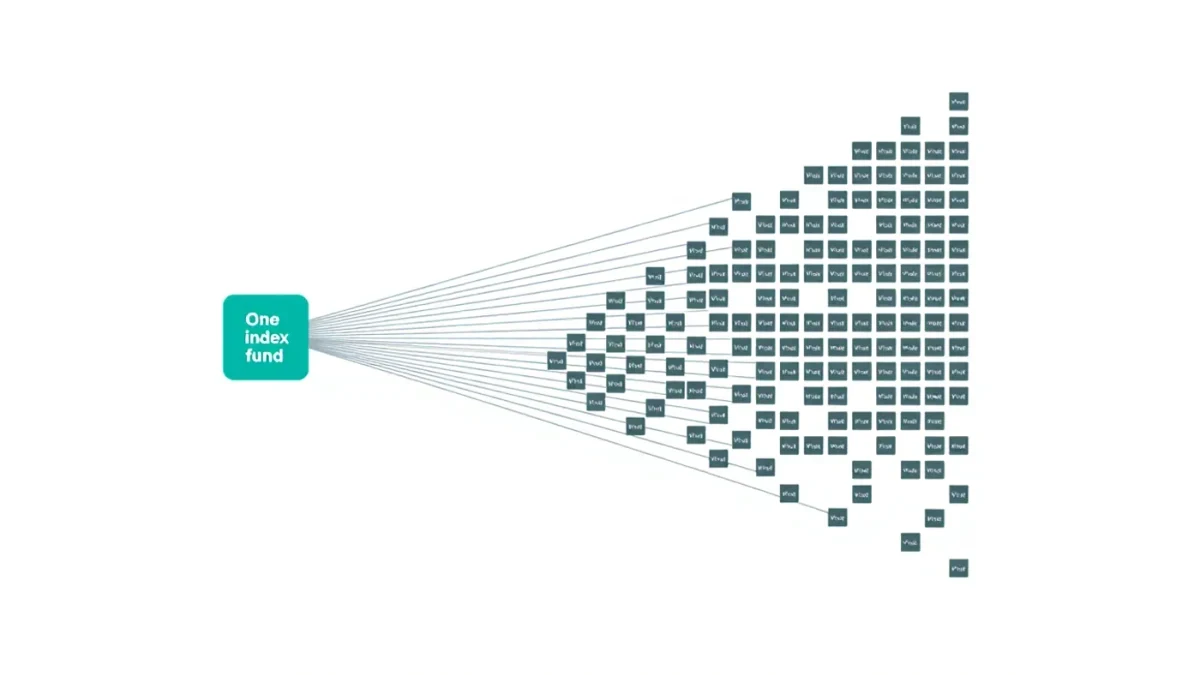
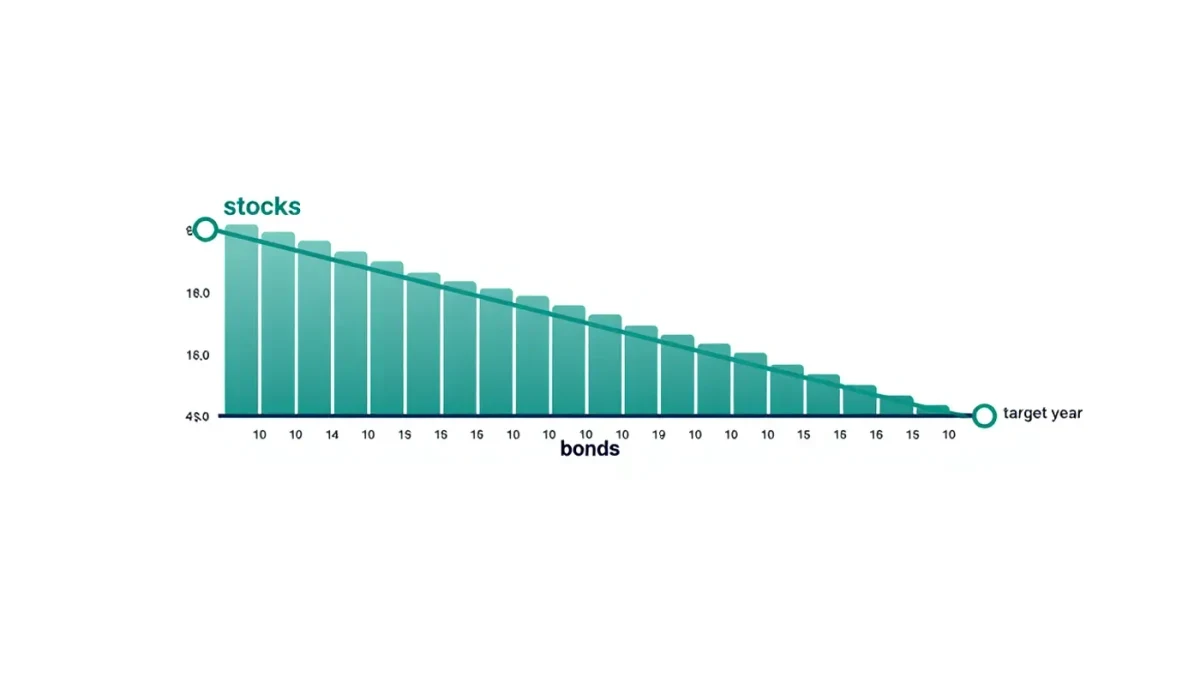
A target-date fund — a TDF — is a single mutual fund that contains an entire diversified portfolio and manages it toward a date in its name: a Target 2050 fund aims its risk at someone retiring around 2050. Inside, it holds a broad mix of US stocks, international stocks, and bonds in proportions set by a glide path — heavy on stocks for distant retirement dates, shifting toward bonds as the date approaches, automatically and without your attention. You pick the year, contribute, and the fund does the reallocating; for a 2026 saver choosing simplicity, it is the entire portfolio in one line on a statement.
SAMCASH publishes information, not financial advice and does not recommend specific funds — this explains the product so you can judge whether simplicity suits you.
How does the glide path work?
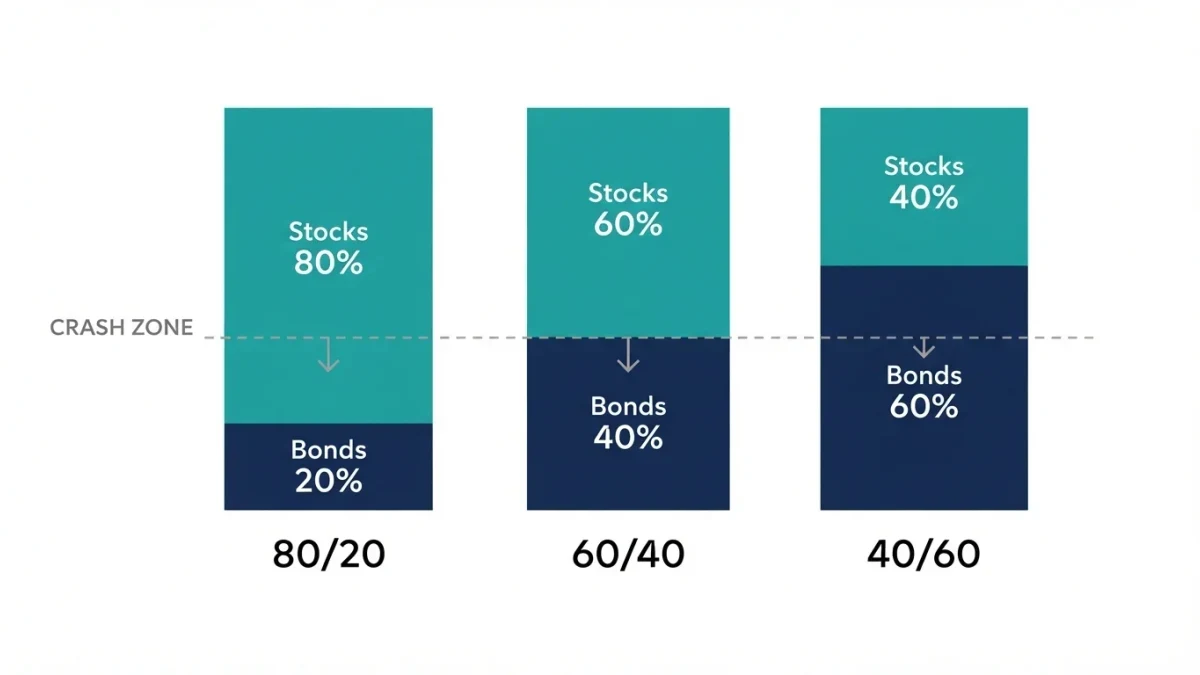
It is the fund's pre-set schedule for reducing risk. A typical 2050 fund holds roughly 90% stocks today; by the target year, most glide paths land between 50% and 60% stocks, and some continue de-risking for a decade into retirement — a through-fund design that treats the date as the start of withdrawals rather than the end. Two funds with the same date can hold meaningfully different mixes, because each provider writes its own path: compare the current stock share and the at-retirement share in the fund documents, not just the year on the label.
| Feature | What it means for you |
|---|---|
| Diversification | Thousands of stocks and bonds in one purchase |
| Rebalancing | Continuous, automatic — no trades for you to place |
| De-risking | Stock share declines as retirement nears |
| Cost | Fund fee plus fees of underlying funds — check both layers |
| Customization | Essentially none — the year is the input |
What are the honest strengths?
Discipline above all. A TDF never forgets to rebalance, never chases last year's winner, and never panics in March 2020 or October 2008 — behaviors that quietly cost average investors more than fees do. It solves the default problem elegantly, which is why it became the standard qualified-default in 401(k) plans after 2006's pension law, and why the majority of retirement plan participants now hold one. For a saver who wants the decision made well once rather than made poorly repeatedly, the product is not a compromise — it is the point.
What are the honest weaknesses?
Four, worth weighing rather than waving off. Fees stack: a fund-of-funds charges its own ratio over underlying funds', so a 0.60% total against a 0.05% three-fund alternative costs real decades of compounding. Generic risk: the 2050 label assumes a typical retiree, not yours — someone with a pension, rental income, or late retirement plans carries different needs than the average the path serves. Mixed portfolios: holding a TDF beside other funds distorts the mix, since the TDF was designed to be the whole portfolio — pairing it with an S&P fund secretly raises risk. And coasting: the year in the name invites a set-and-forget decades long, when family circumstances at least deserve occasional review.
How do you choose one?
- Pick the date honestly — nearest your expected retirement year, and prefer funds designed through the date if you will draw income gradually.
- Compare total cost first: the expense ratio including underlying funds, where the difference between 0.08% and 0.60% compounds into tens of thousands over a career.
- Read the glide path: today's stock share and the landing mix, both in the prospectus summary.
- Use it as the whole stock-and-bond allocation, not a topping — if you hold individual funds too, do the aggregation math yourself.
- In a 401(k), check whether the plan's TDF share class is institutional — many plans offer the cheapest share class automatically.
When is the DIY alternative better?
When you will actually maintain it. A three-fund portfolio — total US, total international, total bond — costs less, shows its parts, and adjusts to personal facts a TDF cannot see. The price is permanent responsibility for rebalancing and, harder, for not touching the mix in bear markets. The choice is temperament, not IQ: the best portfolio on paper loses to the average TDF in the hands of an owner who tinkers and sells. Many households land sensibly in the middle — TDF as the core, one or two deliberate satellite positions, revisited yearly.
FAQ
Do I pick the fund dated the year I retire?
Roughly yes — the year in the name is the design anchor. Choose the nearest year to your likely retirement, understanding that through-style funds keep de-risking after the date, which suits people drawing income for decades after.
Can I hold a target-date fund in an IRA?
Yes — they are ordinary mutual funds available in IRAs and taxable accounts alike. In taxable accounts, note their rebalancing can realize capital gains along the way, which is one reason they shine brightest inside tax-sheltered retirement accounts.
What if my risk tolerance does not match my year?
Buy a different year: a conservative saver retiring in 2050 might choose a 2045 fund for its earlier de-risking, and an aggressive one the reverse. The label is a dial you can turn one way or the other without leaving the one-fund structure.