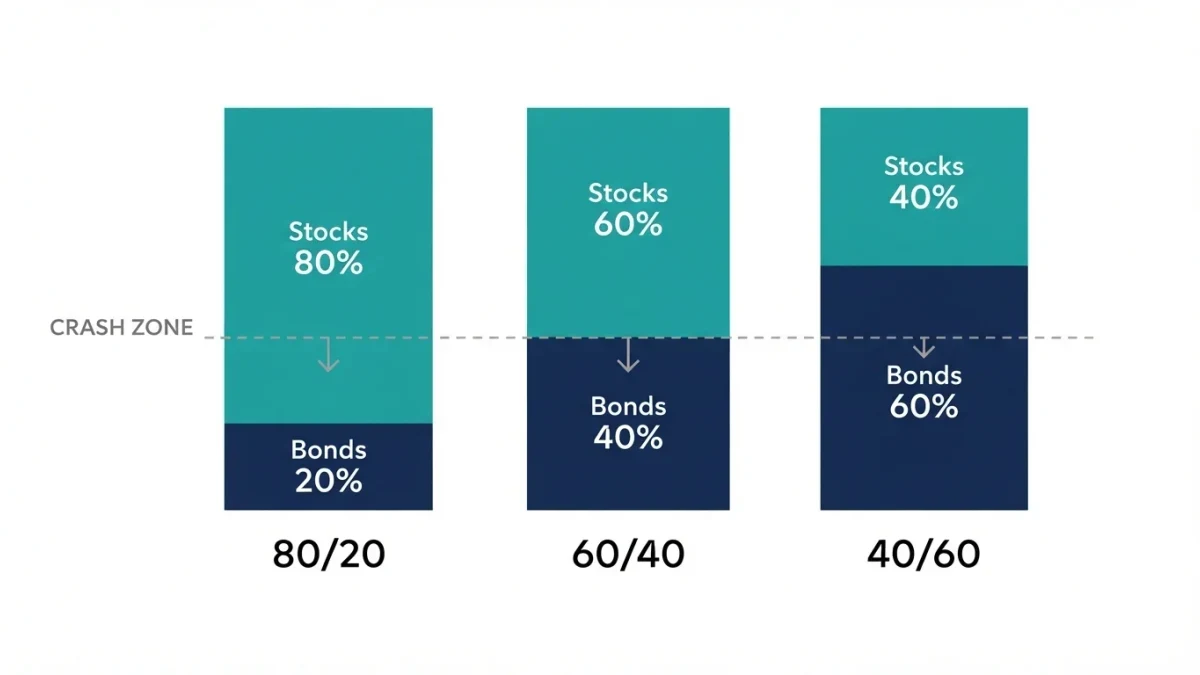
Asset allocation is the division of your portfolio among asset classes — chiefly stocks and bonds — and it explains more of a portfolio's long-run variation than any individual fund choice. A 90/10 stock-bond mix and a 60/40 mix own overlapping markets but behave like different animals: over a bad year the first can fall a third again as hard as the second, and over a great decade it can pull just as far ahead. The honest way to choose is two questions: when do you need the money, and how big a temporary decline can you watch without selling? Everything else is tuning.
SAMCASH publishes information, not financial advice and does not recommend specific allocations — the frameworks below describe how the decision works.
What does the timeline imply?
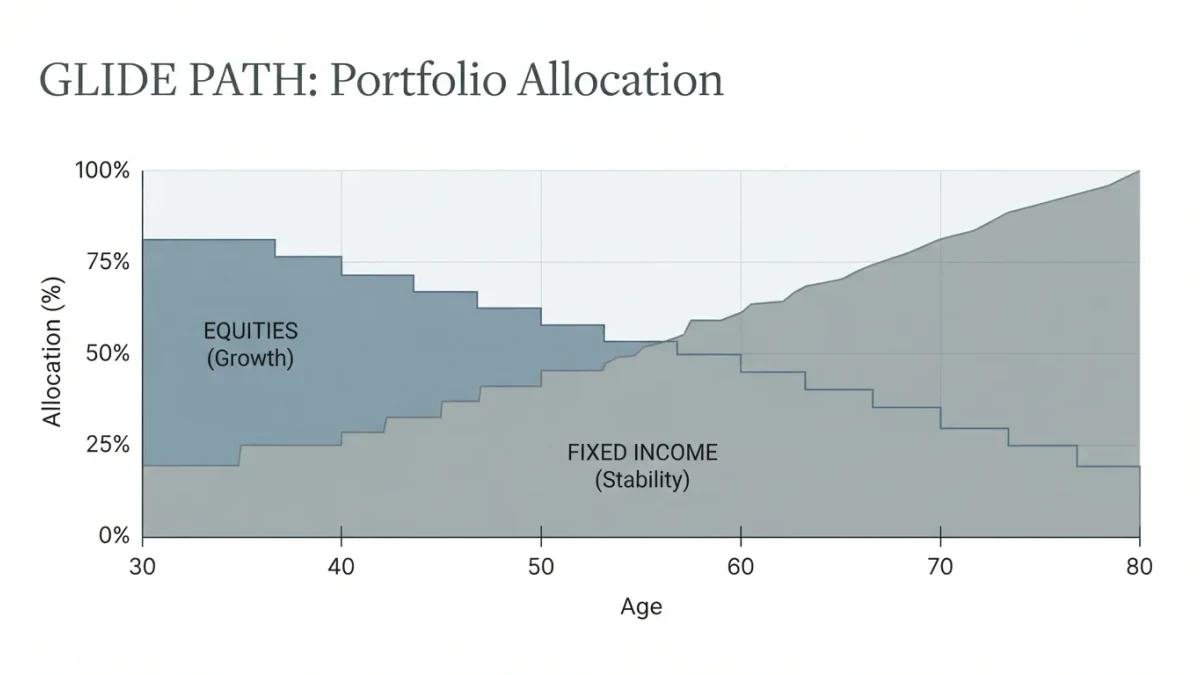
Money needed within three years does not belong in stocks at all — a drawdown it cannot out-wait becomes a permanent loss at the worst moment. Money with five to ten years can carry a meaningful stock share; money with twenty-plus years — retirement for most savers — can carry a heavy one, because time, not cleverness, is what historically converted every past US market crash into a temporary one. The old shorthand of holding your age in bonds, or 110 minus your age in stocks, is a starting guess, not a rule: what it encodes is simply that horizon shrinks as retirement approaches.
What does risk tolerance actually mean?
Not how you feel on a calm day — how you behave in a bad one. The self-test that works: look at the worst bear markets — roughly half the stock market's value in 2008-2009, a third in 2020's crash month — and apply those to your balance. A $200,000 portfolio at 80% stocks falls about $80,000 in a 2008-scale event; if you would sell to stop the pain, your allocation was too aggressive regardless of your age. Selling in falls is the mechanism that converts volatility into loss, so the allocation you can hold beats the allocation that is theoretically optimal.
| Mix (stocks/bonds) | 2008-scale drawdown (approx.) | Suits |
|---|---|---|
| 80/20 | −40% or so | 20+ year horizon, proven stomach |
| 60/40 | −30% or so | 10–20 years, balanced temperament |
| 40/60 | −20% or so | 5–10 years, or conservative sleeper |
| 20/80 | −10% or so | Near-term needs, capital preservation |
Approximations from historical episodes; future declines will differ, and diversification does not promise any particular number.
What are the ingredients of a simple allocation?
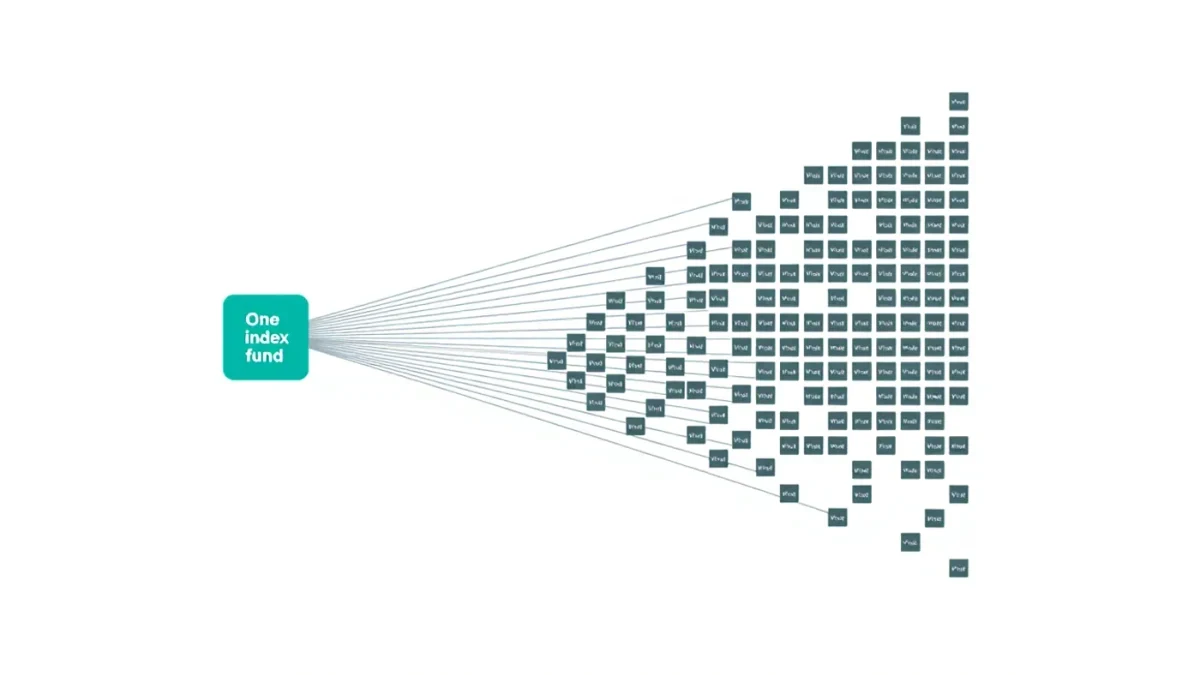
Three funds cover most households: a total US stock market fund, a total international stock fund, and a total bond market fund. The classic three-fund structure assigns the stock sleeve between US and international at whatever split you can defend — anywhere from home-heavy to market-weight — and sets the bond sleeve by the timeline-and-stomach test above. Complexity beyond this buys little: factor tilts, sector funds, and alternatives add decisions without reliable expected payoff for a household investor. Rebalance once a year or when a mix drifts five points from target, and no more often.
How do target-date funds do this for you?
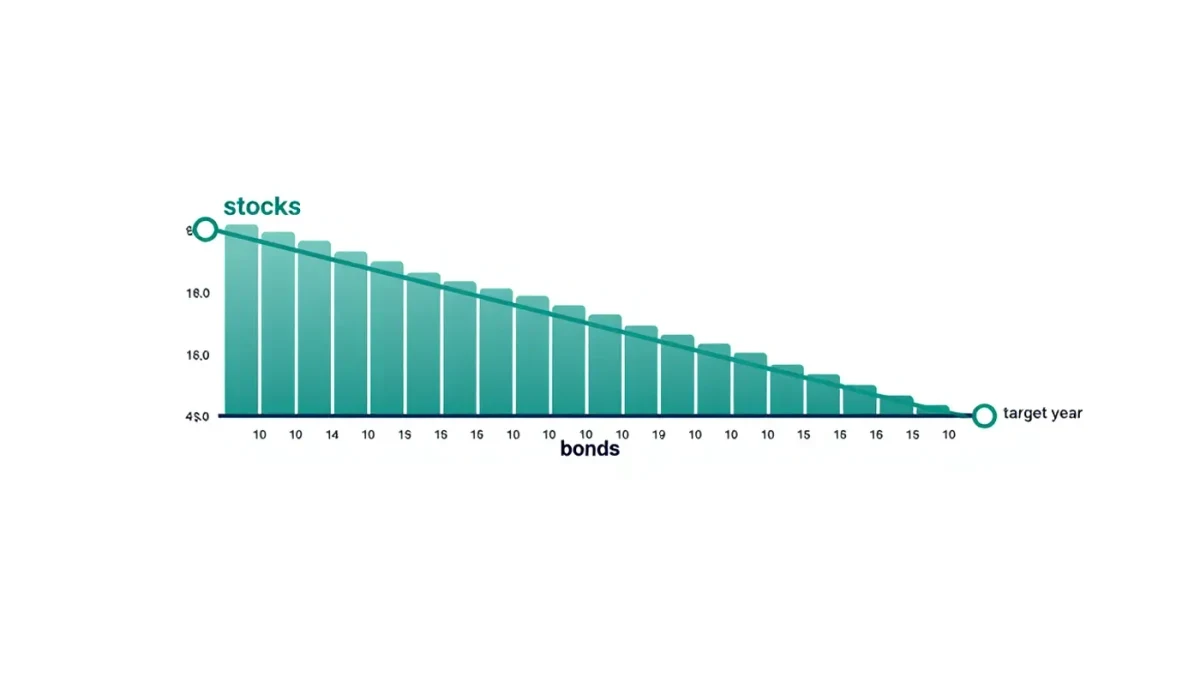
They automate the whole schedule: you pick the fund nearest your expected retirement year, and its glide path de-risks from stock-heavy to balanced over decades, rebalancing continuously. The cost of the convenience is portfolio opacity — holdings, fees, and glide paths vary between providers even at the same target year — and a one-decision product cannot reflect your personal circumstances. Many savers correctly mix the approaches: target-date funds in the 401(k), a three-fund allocation in the IRAs where they can see the parts.
What mistakes warp the decision?
Choosing from recent returns — yesterday's winner allocation is the average investor's most reliable way to buy high. Letting a bull market raise your stock share silently, so risk creeps up precisely when prices are most stretched — this is what rebalancing exists to prevent. Confusing the emergency fund question with the allocation question — cash inside a portfolio is a drag, cash beside it is armor. And copying a stranger's allocation from the internet without their timeline, tax situation, or temperament attached — an allocation is fitted, not universal.
FAQ
Do I need international stocks?
Most long-horizon portfolios include them for diversification — US and foreign markets take turns leading across decades, and owning both removes a bet most savers did not mean to place. The exact split matters far less than having some non-US exposure at all.
Are bonds still worth holding when yields fall?
For the ballast, yes: high-quality bonds have historically held value or risen when stocks fall hard, which is the role they play in the mix. Their yield varies with the Fed's path — the 2025-2026 cutting cycle is why cash and short bonds paid well recently — but their portfolio job is steadiness, not return.
How often should I change my allocation?
Rarely, and for life reasons — a marriage, a home purchase, five years closer to retirement — not market reasons. An allocation reviewed annually and adjusted every few years will outperform one rebuilt around each headline cycle.