
A stock ticker is just a short code for a company, and a basic quote is a handful of numbers about that company's stock right now. Once you know what each field means, you can read one in under a minute. The trick is knowing which numbers carry real information and which are mostly noise.
Take a line like AAPL 212.50 ▲ +1.25 (0.6%). That tells you the company (Apple, by its ticker symbol), the last price the stock traded at ($212.50), and how much that price moved today (up $1.25, or 0.6%). Everything else on a full quote page adds detail around those three facts.
Reading, in the plain sense, is the process of taking in the meaning of symbols, as Wikipedia's overview of reading puts it — and a ticker is exactly that: a compact notation you learn to decode once, then read forever. This guide walks through each part, then sorts the numbers that matter from the ones you can ignore. If you're brand new to the whole topic, the investing hub is the place to start.
What is a ticker symbol, and why do companies have them?
A ticker symbol is a short alphabetical code that uniquely identifies a publicly traded stock. It dates back to the days when prices were printed on paper ticker tape; the code had to be short because every character took time to transmit. The name stuck even though the tape is long gone.
On major US exchanges, symbols are one to five letters. A few conventions are worth knowing:
- Letters alone usually mean a common stock — the ordinary ownership shares most people buy.
- A trailing dot or hyphen plus a letter often signals a share class. A five-letter symbol ending in "Y" typically indicates a foreign company trading in the US as an American depositary receipt (ADR), a wrapper that represents shares held overseas.
- Similar codes can point to different things entirely, so always confirm the full company name before you trade, not just the symbol.
One practical habit: search by company name, then verify the symbol and the exchange it trades on. Two companies can have near-identical tickers on different venues, and clicking the wrong one is an easy, avoidable mistake.
What do the price and the day's change actually tell you?
The main price on a quote is usually the last price at which the stock traded. It is not an offer to sell you shares at that number — it is a record of the most recent trade. The next trade may happen at a slightly different price, seconds later.
Next to it sits the day's change: how much the price has moved since the previous trading session's close, shown in dollars and in percent. The percent figure is the one to look at. A $1.25 move means something very different on a $15 stock than on a $500 stock.
A word of caution here: a single day's move is close to meaningless for judging a company. Stocks move for reasons that range from a company announcement to a market-wide swing to no reason anyone can name. For a beginning investor, the day's change is context, not a signal to act. If you buy in stages over time rather than all at once, as dollar-cost averaging is commonly explained, daily moves matter even less. This connects to our earlier piece, What is dollar-cost averaging, and does it work?.
What are bid, ask, and volume — and do they matter to you?
These fields describe the plumbing of trading rather than the company itself:
- Bid — the highest price a buyer is currently willing to pay.
- Ask — the lowest price a seller is currently willing to accept.
- Volume — how many shares have traded so far today.
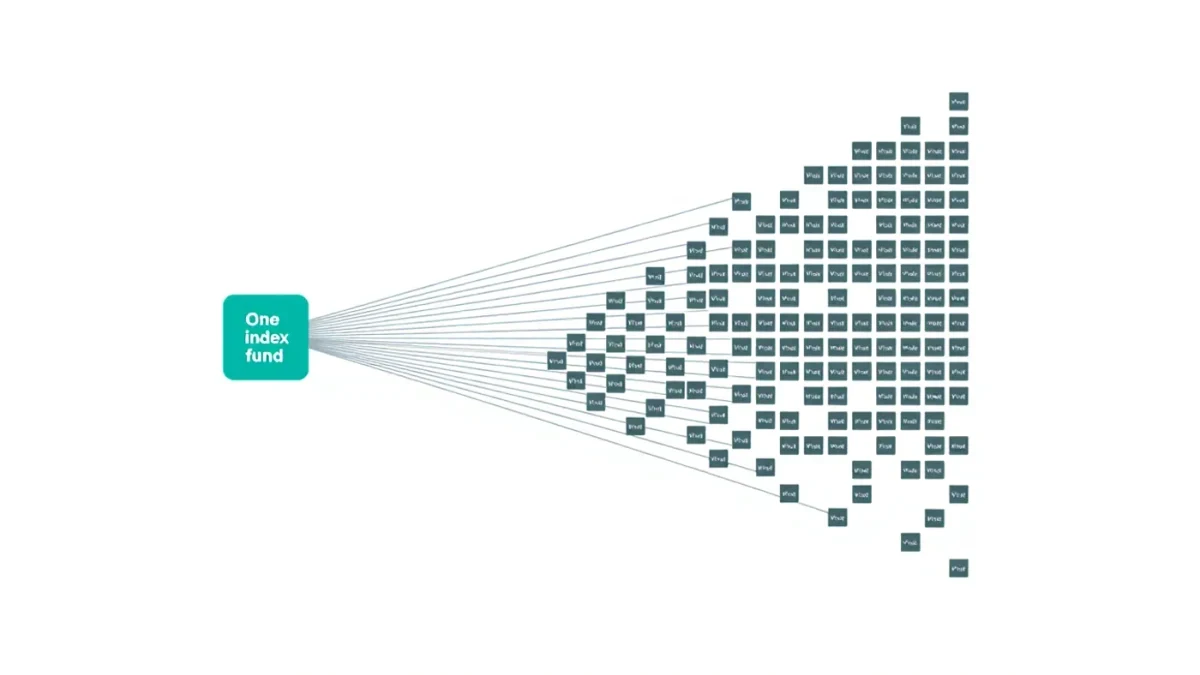
The gap between the bid and the ask is the spread, and it is a real cost: buy at the ask and sell at the bid, and you lose that difference. On large, heavily traded companies the spread is usually pennies, small enough that most long-term investors barely notice it. On thinly traded stocks it can be wide enough to matter, which is one reason beginners are generally steered toward big, liquid names or funds. Readers following this should also see What is an index fund, and why beginners start there.
Volume tells you how much attention a stock is getting today. High volume on a big price move means many participants are involved; low volume moves are easier to reverse. It is useful context, but not a reason by itself to buy or sell.
Which numbers on a quote actually matter for a beginner?
Strip a quote page down and three fields do most of the useful work:
- Market capitalization — the total value of all the company's shares (share price times share count). It tells you the company's size, which shapes how volatile the stock tends to be. Our index fund explainer covers why size categories matter when you buy funds instead.
- 52-week range — the lowest and highest prices of the past year. It gives you a quick sense of where today's price sits relative to the recent past. It does not tell you whether the stock is cheap or expensive.
- P/E ratio — the price divided by the company's earnings per share over the past year. Roughly, it is how many dollars you pay per dollar of annual profit. It is only meaningful compared with the same company's history or similar companies, and it is meaningless when earnings are negative.
Our analysis: for someone building a long-term portfolio, none of these numbers changes what to do. They matter most when you are comparing individual stocks against each other. If your plan is broad funds — as diversification makes the case for — the quote page is mostly a curiosity.
What is noise on a quote page?
Plenty of what fills a quote screen is either plumbing detail or short-term chatter:
- Real-time flicker. Prices update by the second. Watching them is like watching a speedometer while the car is parked.
- After-hours prices. Trading outside regular hours happens in thin volume, so those prices can be jumpy and less reliable.
- Analyst ratings and price targets. These are opinions, often with assumptions you cannot see. Treat them as one input at most.
- Headlines attached to the quote. News drives short-term moves, but a headline rarely changes a company's long-term value.
None of this is useless — it is just not decision-grade for a household investor. The numbers worth your attention are size, valuation context, and your own risk tolerance, which no quote page can measure for you.
Where does reading a quote fit into actually investing?
Knowing how to read stocks is a useful literacy, like understanding a nutrition label. It helps you follow financial news, sanity-check what a fund holds, and ask better questions. It is not, by itself, a strategy. The evidence on beginner outcomes points toward broad, low-cost funds and steady contributions rather than stock-picking; the fee you pay shows up in a fund's expense ratio, which we explain field by field.
The honest takeaway: you can now read a quote line and know what each number is. Whether any given stock belongs in your plan is a separate question — one that depends on your goals, timeline, and the rest of your portfolio, not on today's price move. Prices, spreads, and quote fields vary by platform and change over time, so treat any specific figure you see as a snapshot, not a constant.