
A Roth IRA is an individual retirement account you fund with after-tax dollars — money you have already paid income tax on — in exchange for which the account grows untaxed and qualified withdrawals in retirement are entirely tax-free. The 2026 contribution limit is $7,500 across all your IRAs, and the money can hold the same investments as any brokerage account: index funds, ETFs, bonds, cash. The trade is temporal: you pay tax now instead of later, which pays off whenever your future tax rate exceeds today's — a bet younger and lower-income savers are structurally positioned to win.
SAMCASH publishes information, not financial advice — retirement account choices interact with your income, taxes, and employer plan, and the IRS pages are authoritative on limits.
How does it differ from a traditional IRA?
Timing of the tax break. Traditional IRA contributions may be deductible now and get taxed at withdrawal; Roth contributions are taxed now and withdraw tax-free later. A useful worked comparison under stated assumptions: $6,000 a year for thirty years at an assumed 6% average annual return grows to about $474,000 in either wrapper — the arithmetic is identical, since 6,000 × [(1.06³⁰ − 1) ÷ 0.06] ≈ 474,350 on $180,000 of contributions. The difference is the tax bill on the $294,000 of growth: in the Roth, zero at withdrawal; in the traditional, ordinary income rates on the whole distribution as it comes out. Which is better depends on the tax rate at each end — nobody knows their future rate, which is why many savers hold both.
| Feature | Roth IRA | Traditional IRA |
|---|---|---|
| Tax on contributions | Paid now (after-tax) | Possibly deducted now |
| Tax on retirement withdrawals | None, if qualified | Ordinary income |
| 2026 contribution limit | $7,500 | $7,500 (shared) |
| Required distributions at 73+ | None in owner's lifetime | Yes |
| Access to contributions early | Anytime, tax- and penalty-free | Taxed and usually penalized |
Who can contribute?
Anyone with earned income at least equal to the contribution, within income phase-outs that have hovered recently around $150,000–$165,000 modified adjusted gross income for single filers and $236,000–$246,000 for joint filers — above those ranges the direct contribution shrinks and then disappears, so confirm the current year's figures on the IRS IRA page. There is no minimum age and no age cap; a teenager with a summer job can start one, and the decades available to that money are the entire argument. Workers 50 and older can add a modest catch-up — again, the IRS page carries the current figure.
What about the five-year rule and early access?
Two separate clocks protect you differently. Contributions — the principal you put in — can come out anytime, tax- and penalty-free, because that money was already taxed; this makes the Roth a surprisingly liquid retirement account, though raiding it defeats its purpose. Earnings are the protected part: tax-free withdrawal of earnings generally requires being 59½ and having held any Roth for five years. Early earnings withdrawals can owe tax plus a 10% penalty, with specific exceptions — first-home purchase costs, qualified education, disability — carved out in IRS rules.
How do you open one?
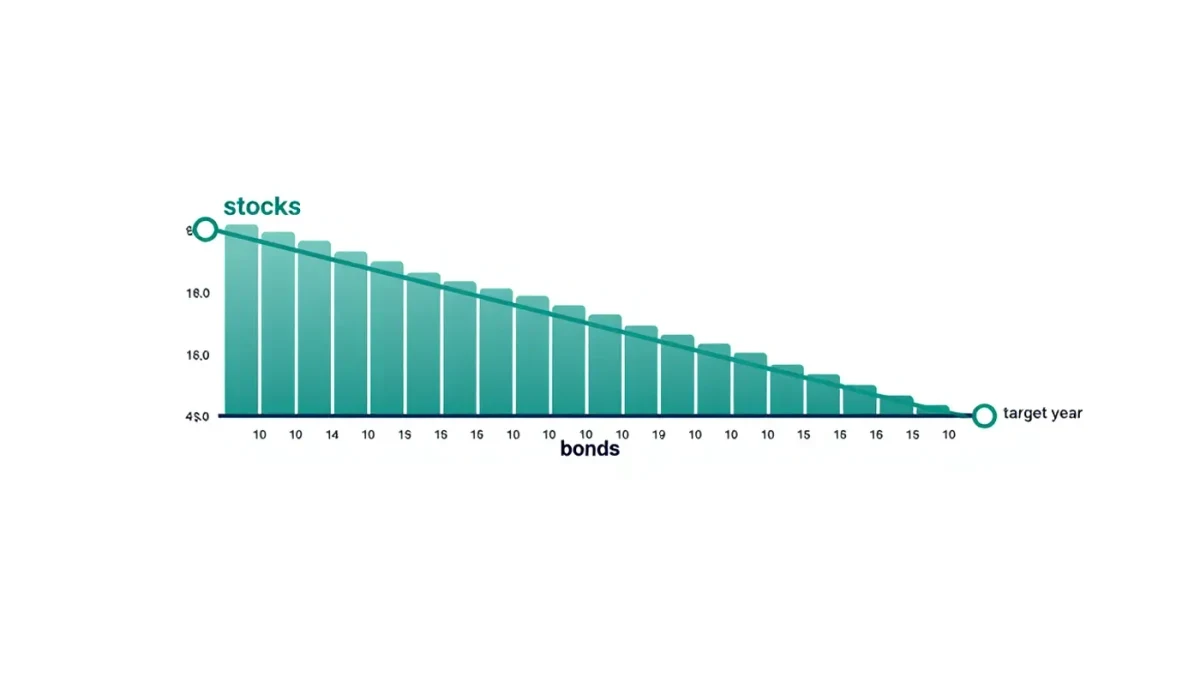
Fifteen minutes at any major brokerage: choose Roth IRA as the account type, fund it by transfer or rollover, then buy investments inside it — for most beginners, a broad index fund or a target-date fund aligned to a retirement year. Two habits carry most of the value: automate a monthly amount, and file the contribution on your tax return correctly (Form 8606 is not required for plain Roth contributions, but keep your own records). One warning: cash sitting uninvested inside a Roth earns nothing toward retirement — funding the account and investing the money are two separate steps.
FAQ
Can I contribute to a Roth if I have a 401(k) at work?
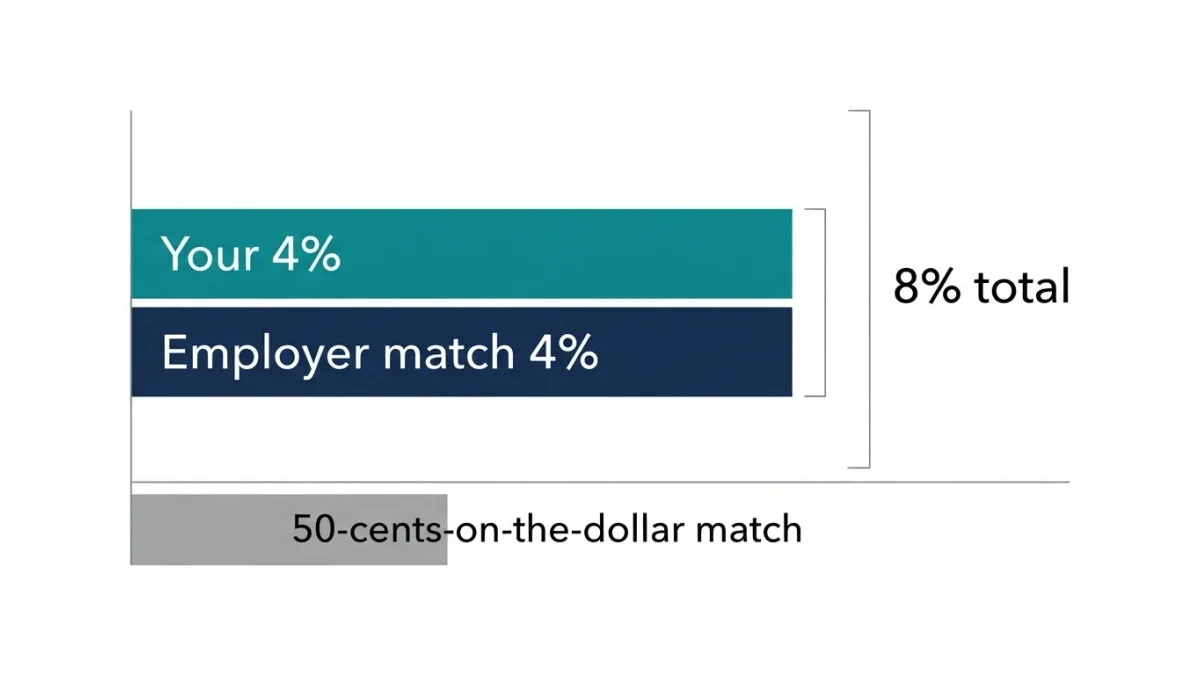
Yes — workplace plan participation does not block Roth IRA contributions; only the income phase-outs do. The classic pairing captures an employer match in the 401(k) and tops up savings in the Roth for tax diversification.
What if my income is above the phase-out?
A backdoor route — contributing to a traditional IRA and converting to a Roth — exists and is legal, but it carries pro-rata tax complications when you hold other traditional IRA balances. Read the mechanics before attempting, or have a tax professional walk the conversion with you.
Is a Roth IRA an investment?
No — it is an account with tax rules. The investments inside it are chosen separately, and a Roth holding cash or an unsuitable fund underperforms a taxable account holding a good index fund. Open the account, then fill it deliberately.